Academic Excellence: 5 NCKU Professors Honored at 2026 Y. Z. Hsu Tech Awards
Written by NewsCenter. Image credit to Center for Teaching and Learning Development
Distinguished Professor Chih-Lung Lin of the Department of Electrical Engineering, Chair Professor Tong-Yee Lee of the Department of Computer Science and Information Engineering, Professor Chia-Hsiang Lin of the Department of Electrical Engineering, Professor Chao-Yu Chen of the Department of Photonics, and Professor Jeng-Shiung Jan of the Department of Chemical Engineering at National Cheng Kung University (NCKU) have long been deeply dedicated to scientific research and technological innovation. In 2026, they were honored with multiple accolades at the Y. Z. Hsu Science and Technology Award presented by the Far Eastern Y. Z. Hsu Science and Technology Memorial Foundation, spanning categories such as the Science and Technology Chair, Science and Technology Paper Award, and Science and Technology Invention Award. The recognition of these five professors highlights NCKU's academic accomplishments and influence in the fields of artificial intelligence, optoelectronic technology, and engineering R&D.
The Y. Z. Hsu Science and Technology Memorial Foundation was the first private tech foundation approved by the National Science and Technology Council (NSTC) of the Executive Yuan, established with the mission of promoting a domestic culture of technology and innovation. The Y. Z. Hsu Science and Technology Award places a strong emphasis on emerging technologies, featuring honors such as the Y. Z. Hsu Science and Technology Chair, Y. Z. Hsu Science and Technology Paper Award, and Y. Z. Hsu Science and Technology Invention Award. It has long rewarded outstanding talents in fields such as nanotechnology, communication & photonics, biotechnology & medicine, and green technology, making it a prestigious and major award in Taiwan.
A brief introduction to the awards won by the five faculty members, along with their research achievements and contributions, is presented below:
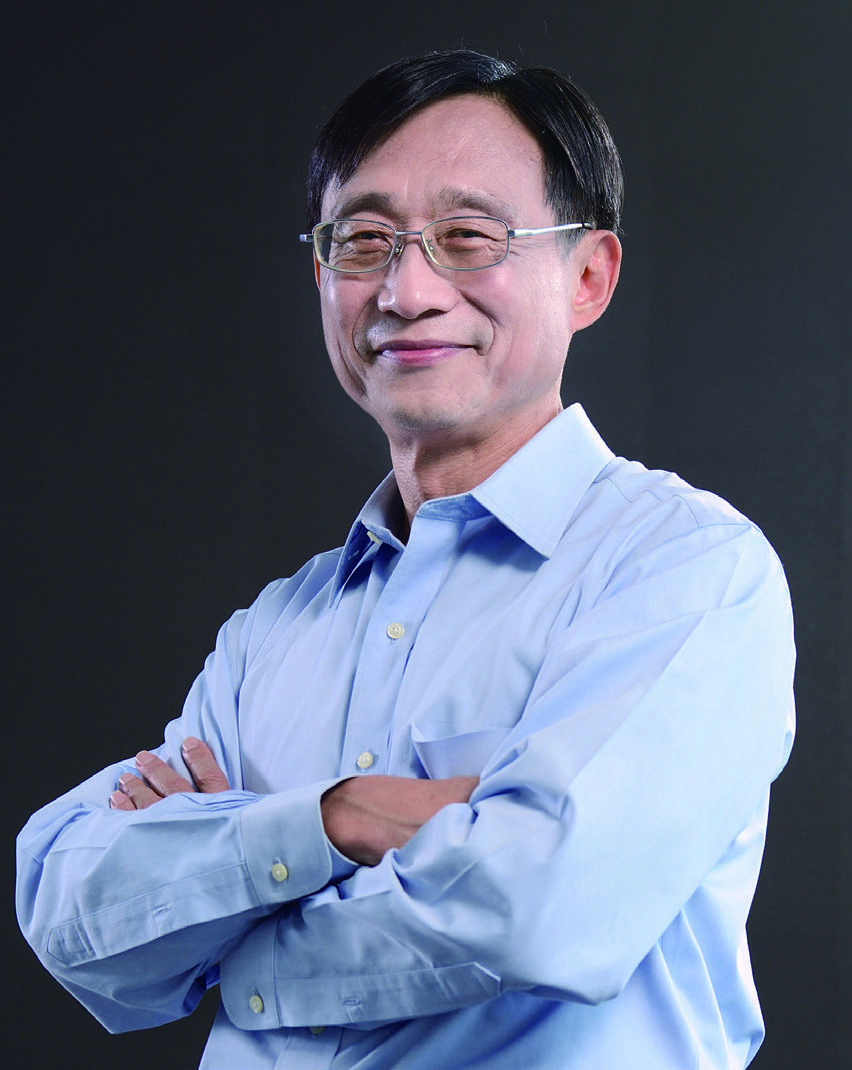
Distinguished Professor Chih-Lung Lin
The 24th Y. Z. Hsu Science and Technology Chair: Distinguished Professor Chih-Lung Lin, Department of Electrical Engineering.
Professor Chih-Lung Lin has taught at NCKU for 22 years, primarily focusing his research on display optoelectronic technology and biomedical optoelectronic systems. The key breakthroughs and contributions of his research include: pioneering low-power Micro-LED driving systems, ambient-light-resistant Mini-LED automotive displays, high-PPI AR/VR micro-display technologies, novel AMOLED external Demura and Deburn-in algorithms alongside pixel circuit compensation techniques, large-sized in-cell optical electronic whiteboards featuring multi-user interaction innovations, gate driver circuit designs, the generation of electronic paper driving waveforms utilizing deep learning AI models and reinforcement learning techniques, as well as the development of advanced biomedical optoelectronic electronic systems.
Over the past 22 years, Professor Lin has published a total of 96 international journal papers as first or corresponding author (including 83 IEEE journal papers where he served as first or corresponding author) and has been granted 313 patents. In the past five years, he has served as the principal investigator for projects totaling NT$210 million and has secured 17 technology transfer licensing deals amounting to NT$8 million. In the same five-year span, he published 21 papers as first or corresponding author in top-tier international journals such as the IEEE Journal, presented 63 conference papers, and obtained 137 domestic and international patents.
In terms of talent cultivation, Professor Lin has advised 84 master's students and 29 doctoral students. His students have collectively won 36 national thesis awards and 34 national competition awards. Furthermore, he was presented with the NCKU Excellent Teacher Award in recognition of his passion for teaching.
The 24th Y. Z. Hsu Science and Technology Paper Award: Chair Professor Tong-Yee Lee of the Department of Computer Science and Information Engineering, Professor Chia-Hsiang Lin of the Department of Electrical Engineering, and Professor Chao-Yu Chen of the Department of Photonics.
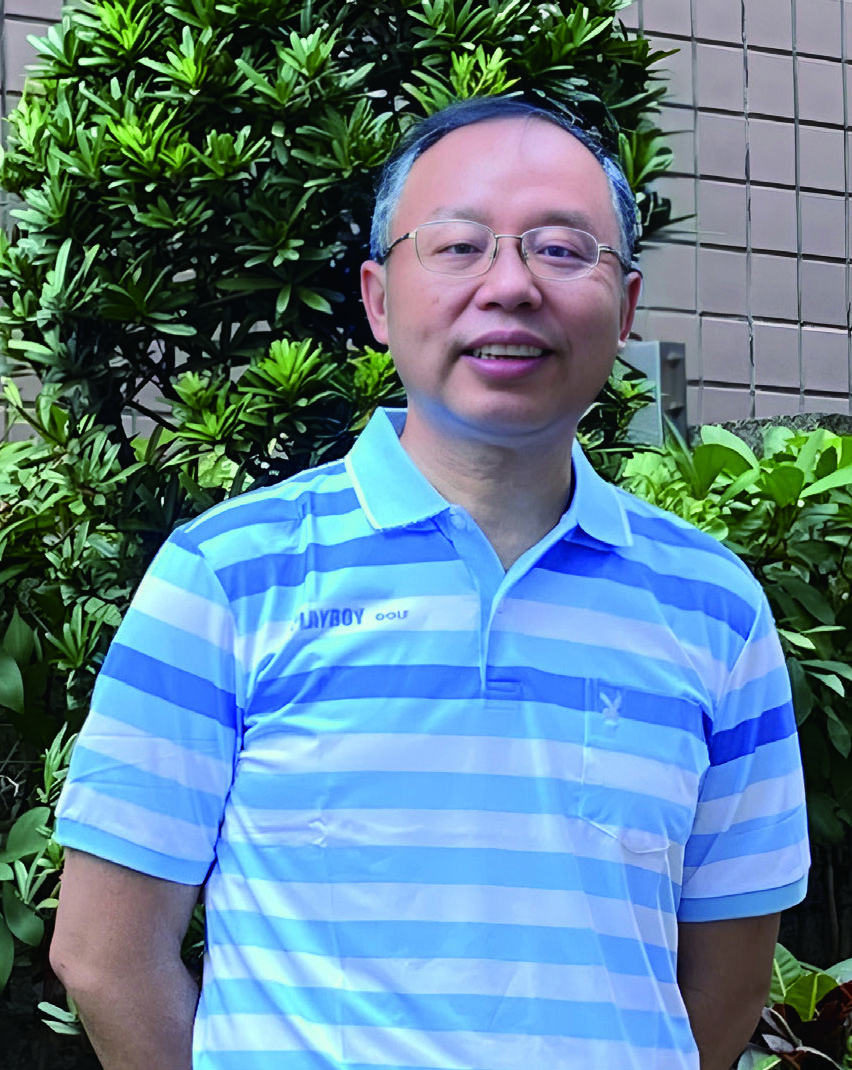
Chair Professor Tong-Yee Lee
Y. Z. Hsu Science and Technology Paper Award (Artificial Intelligence): Chair Professor Tong-Yee Lee, Department of Computer Science and Information Engineering
The award-winning paper, "Shape Cloud Collage on Irregular Canvas", published in IEEE Transactions on Visualization and Computer Graphics, explores a challenging and novel problem in computer graphics/visualization: achieving optimal visualization within a 2D shape cloud while reducing packing gaps and overlaps, while simultaneously emphasizing key shape clouds by presenting them in larger sizes. The challenge of this research lies in the fact that existing 2D shape layout methods tend to produce excessive gaps or distortion.
To overcome these limitations, Professor Lee and his team proposed an innovative layout framework. By employing differentiable optimization techniques, they modeled the irregular packing problem as a differentiable pipeline. This method allows for fast and precise end-to-end optimization, perfectly and tightly arranging irregular 2D shape clouds on an irregular canvas to produce high-quality layouts. Its performance significantly outperforms existing state-of-the-art methods.
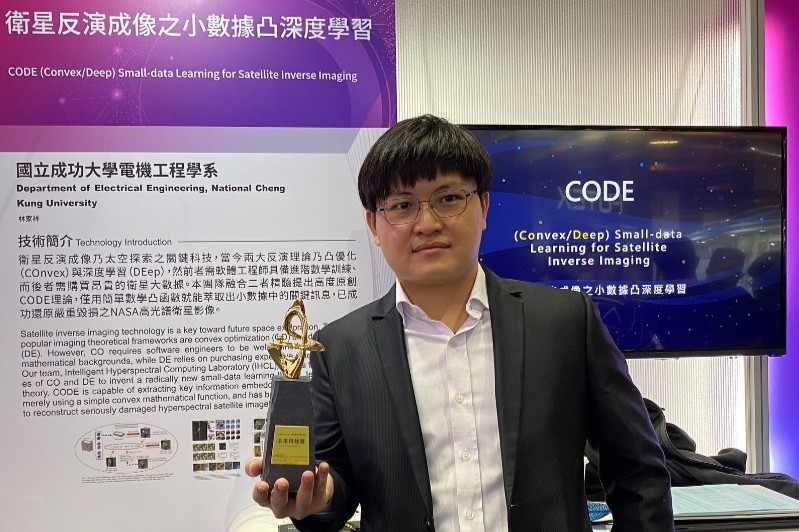
Professor Chia-Hsiang Lin
Y. Z. Hsu Science and Technology Paper Award (Artificial Intelligence): Professor Chia-Hsiang Lin, Department of Electrical Engineering
Professor Chia-Hsiang Lin and his team combined generative AI with quantum computing, demonstrating the foresight and importance of quantum AI to academia and industry alike. Their published COS2A software equivalently transforms the highly difficult "spectral super-resolution problem" into a "spatial super-resolution problem," capable of turning ordinary satellite imagery into high-definition quality that vastly enhances target detection capabilities. As for spectral deviations in details caused by local oscillations, these were substantially improved through quantum entanglement technology, which has been successfully applied to weather forecasting and can also be utilized for monitoring national land changes, as well as detecting aircraft and ships.
The team's research also discovered that while traditional AI requires massive amounts of data, introducing appropriate quantum entanglement techniques can effectively reduce the amount of required training data. For instance, an Alzheimer's disease biomarker that traditionally required data from 800 subjects for an AI to learn can be mastered using the team's quantum AI with data from only 48 subjects. Additionally, in restoring satellite images, the team utilized a Quantum Deep Network (QUEEN), which performed approximately 720 times faster than traditional AI, making it exceptionally well-suited for future technology deployment in the Edge AI field.
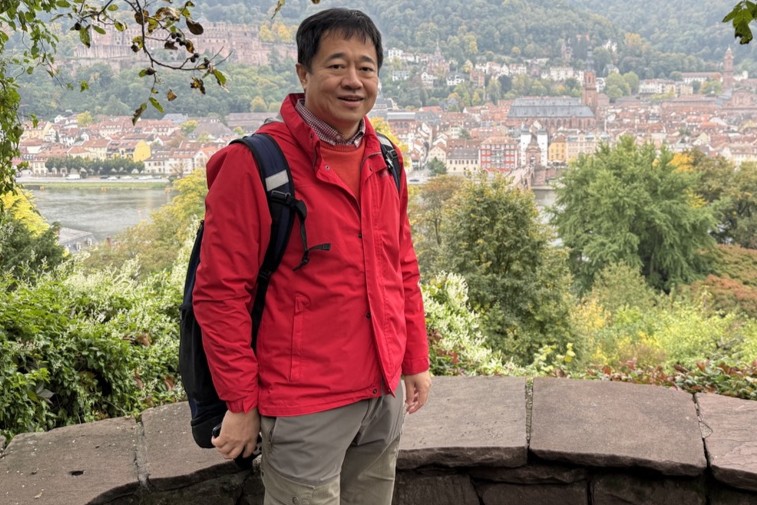
Professor Chao-Yu Chen
Y. Z. Hsu Science and Technology Paper Award (Optoelectronic Technology): Professor Chao-Yu Chen, Department of Photonics
Professor Chao-Yu Chen's team has delved deeply into the research of perovskite solar cells. Although the efficiency of perovskite solar cells is approaching that of traditional silicon cells, "instability caused by ion migration" has long been an insurmountable bottleneck for this material. Throughout a long and often frustrating experimental process, the team successfully utilized steric hindrance regulation of A-site cations to effectively suppress halide migration. This drastically enhanced the operational stability of the devices, marking a pivotal step forward for the practical commercialization of next-generation solar cells.
Professor Chao-Yu Chen expressed that the team felt deeply honored and grateful for their paper to win the 24th Y. Z. Hsu Science and Technology Paper Award (Optoelectronic Technology). He stated, "Scientific breakthroughs are never achieved single-handedly. Receiving this heavyweight award instills in us an even greater sense of mission. Currently, our team is participating in a project with Academia Sinica's Critical Research Agenda Center, and we have also achieved highly prominent results in our research on perovskite/silicon tandem solar cells."
Professor Chen hoped to use this opportunity to encourage all researchers worldwide dedicated to this field: perovskite solar cells are at a critical crossroads toward industrialization, and the challenges ahead remain formidable. He hopes that the validation from this award will inspire more outstanding talents and cross-disciplinary teams to join forces, cooperate closely, overcome obstacles, and ensure the continued thriving of this key green energy sector, thereby making substantial contributions to global net-zero carbon emissions.
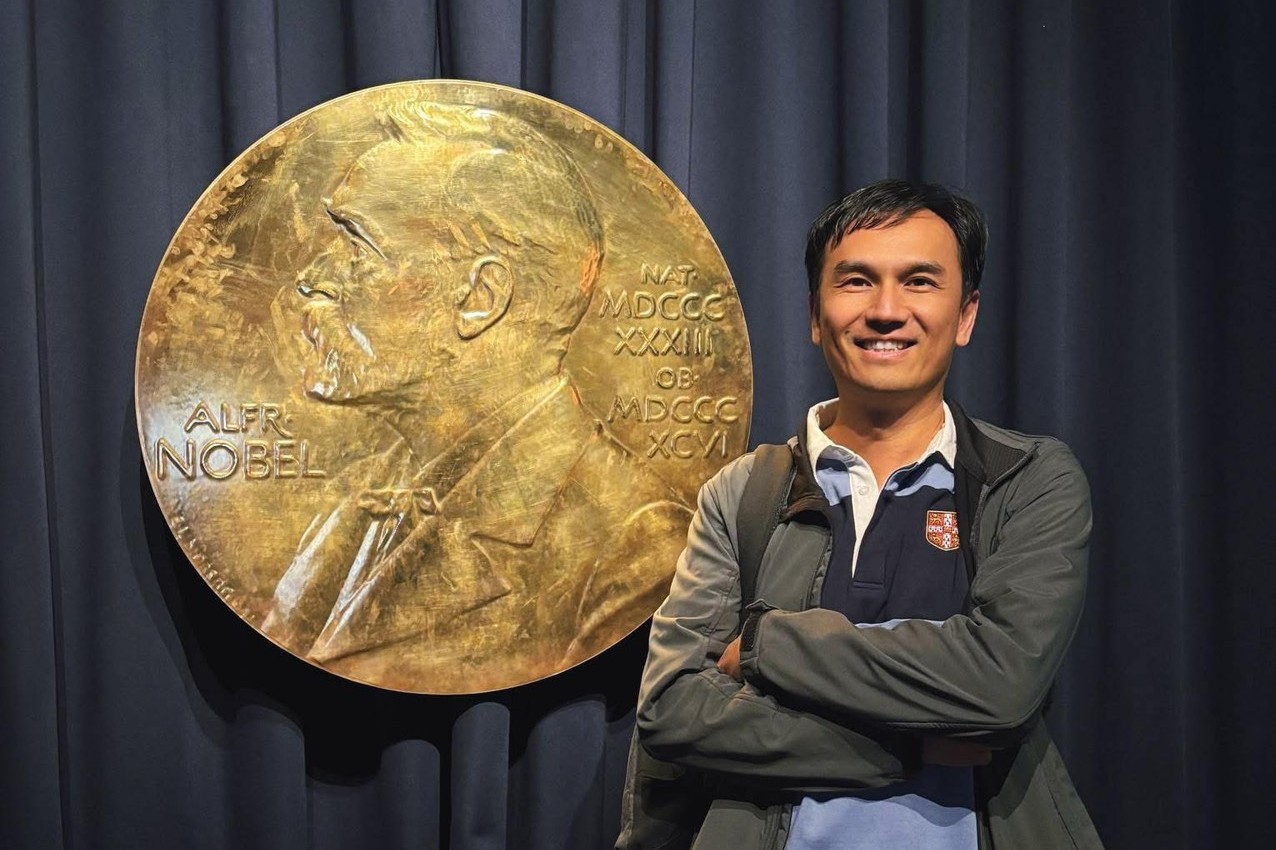
Professor Jeng-Shiung Jan
The 12th Y. Z. Hsu Science and Technology Invention Award: Professor Jeng-Shiung Jan, Department of Chemical Engineering
The safety of lithium-ion batteries is a major challenge currently facing society. Collaborating with China Petrochemical Development Corporation (CPDC), Professor Jeng-Shiung Jan researched the potential of applying various structures of phosphazene derivatives as lithium-ion battery additives. When added to commercial electrolytes, they can effectively boost the electrochemical performance and safety of high-energy-density lithium-ion batteries. This technology has already secured patents in the Republic of China (Taiwan), Japan, and Europe, while patent applications in China and the United States are currently under review.
The same type of phosphazene derivative additive was also applied as a commercial cathode additive and was found to effectively improve the electrochemical performance and safety of high-energy-density lithium-ion batteries. This application has been granted a patent in Taiwan, with a Chinese patent under review. CPDC has successfully mass-produced it, and it has been listed in the company's product catalog. Phosphazene derivatives can be applied not only to elevate the electrochemical performance and safety of lithium batteries but also as novel flame-retardant materials for encapsulation and high-frequency substrates, as well as other industrial applications requiring flame retardancy. By introducing different functional groups into the cyclic phosphazene core structure, performance can be adjusted or enhanced, giving it extremely high market potential across various application fields in the future.
With five professors winning the Y. Z. Hsu Science and Technology Award this time, NCKU not only showcases its exceptional research outcomes in artificial intelligence, optoelectronic technology, and engineering R&D, but also proves once again that the university continues to bridge industrial demands with innovative research. Through forward-looking tech R&D and talent cultivation, NCKU remains a vital force contributing to Taiwan's technological competitiveness and global sustainable development.
Provider:
NCKU News Center
Date:
2026-07-20