Tech Meets Community: NCKU Clinches 3 Golds and 1 Silver at 2026 Taiwan Sustainability Action Awards
Written & Image credit to NCKU News Center.

NCKU won 3 Golds and 1 Silver at the 2026 TSAA, demonstrating sustainable momentum through interdisciplinary technology and local co-learning. Group photo(from left to right): Prof. Yun-Che Wang (Dept. of Civil Engineering), Prof. Hsun-Ping Hsieh (Dept. of Electrical Engineering), Executive Vice President Yuh-Neu Chen, Prof. Yu-Hsien Lin (Dept. of Systems and Naval Mechatronic Engineering), and Assoc. Prof. Chung-Ping Young (Dept. of Computer Science and Information Engineering).
The 2026 Asia-Pacific Sustainability Expo opened on the 27th of August at the Taipei World Trade Center (TWTC) Exhibition Hall 1. Concurrently, the Taiwan Institute for Sustainable Energy (TAISE) presented the 6th Taiwan Sustainability Action Awards (TSAA) 2026, commending outstanding contributions to the implementation of the United Nations' 17 Sustainable Development Goals (SDGs). National Cheng Kung University (NCKU) won a total of four awards—3 Golds and 1 Silver—demonstrating its multifaceted sustainability practices ranging from disaster resilience and smart oceans to urban governance and humanistic education.
NCKU’s Gold Award-winning initiatives included the "Sustainable Digital Twin Platform for Slopeland" (SDG 9), the "Smart Marine Ecology Guardian Action" (SDG 14), and the "NCKU City Centennial Co-learning Engine" (SDG 17), while the Silver Award was presented to the "Local Co-learning: Exploring Together" project (SDG 4).
These four projects span smart disaster prevention, marine conservation, urban governance, and humanistic education. By integrating research and teaching into real-world settings, they address critical issues such as climate change and sustainability education.
NCKU has long promoted bringing professional knowledge beyond the campus into cities, communities, and natural environments, emphasizing the translation of research outcomes into practical and sustainable solutions. Winning these four awards not only reflects the deep commitment of each team to sustainability issues, but also highlights NCKU’s ability to serve society with university knowledge and co-create sustainable value with local communities.

Gold Award | SDG 9: "Sustainable Digital Twin Platform for Slopeland". Project lead Prof. Yun-Che Wang (Civil Engineering) accepted the award for the team.

“Sustainable Digital Twin Platform for Slopeland” leverages technology to build environmental sustainability and disaster resilience.
In response to extreme weather threats against soil and water resources as well as settlement safety, National Cheng Kung University established the "Sustainable Digital Twin Platform for Slopeland," led by Professor Yun-Che Wang (Department of Civil Engineering) in interdisciplinary collaboration with Professor Tzen-Yuh Chiang (Department of Life Sciences) and Research Expert Jyh-Chang Chen (College of Liberal Arts). The platform leverages technology to build environmental sustainability and disaster resilience, fostering sustainable production and local economic revitalisation while safeguarding long-term biodiversity.
In terms of implementation, the team integrated IoT and geospatial information technology to deploy seismographs, soil/groundwater sensors, and rain gauges on slopelands. Combined with drones and Geographic Information Systems (GIS), they constructed high-precision information models of the digital environment and slopeland physics. Furthermore, AI and digital twin technologies analyze monitoring data and climate models to forecast slope stability and simulate multi-hazard potentials such as flooding and debris flows. The early-warning tools developed by the team provide information on slope stability, soil conditions, carbon emissions, and ecology across the Zengwen River basin. Integrated into disaster reporting and educational frameworks, the project has successfully built real-time warning mechanisms and dynamic risk maps, establishing adaptive solutions balancing technological innovation, soil/water conservation, and community safety.
Beyond advanced technology, the project values local community connections. Through community workshops, the team collected oral histories and cultural memories from local residents to fill hardware blind spots. As environmental data accumulated, natural farming methods and biotechnology were integrated to establish specialized industry chains—realizing a complete end-to-end model from production to processing and marketing. The team has also embedded these results into interdisciplinary curricula and conducted overseas research exchanges in Japan, expanding the Zengwen River basin experience into a replicable sustainable governance model.
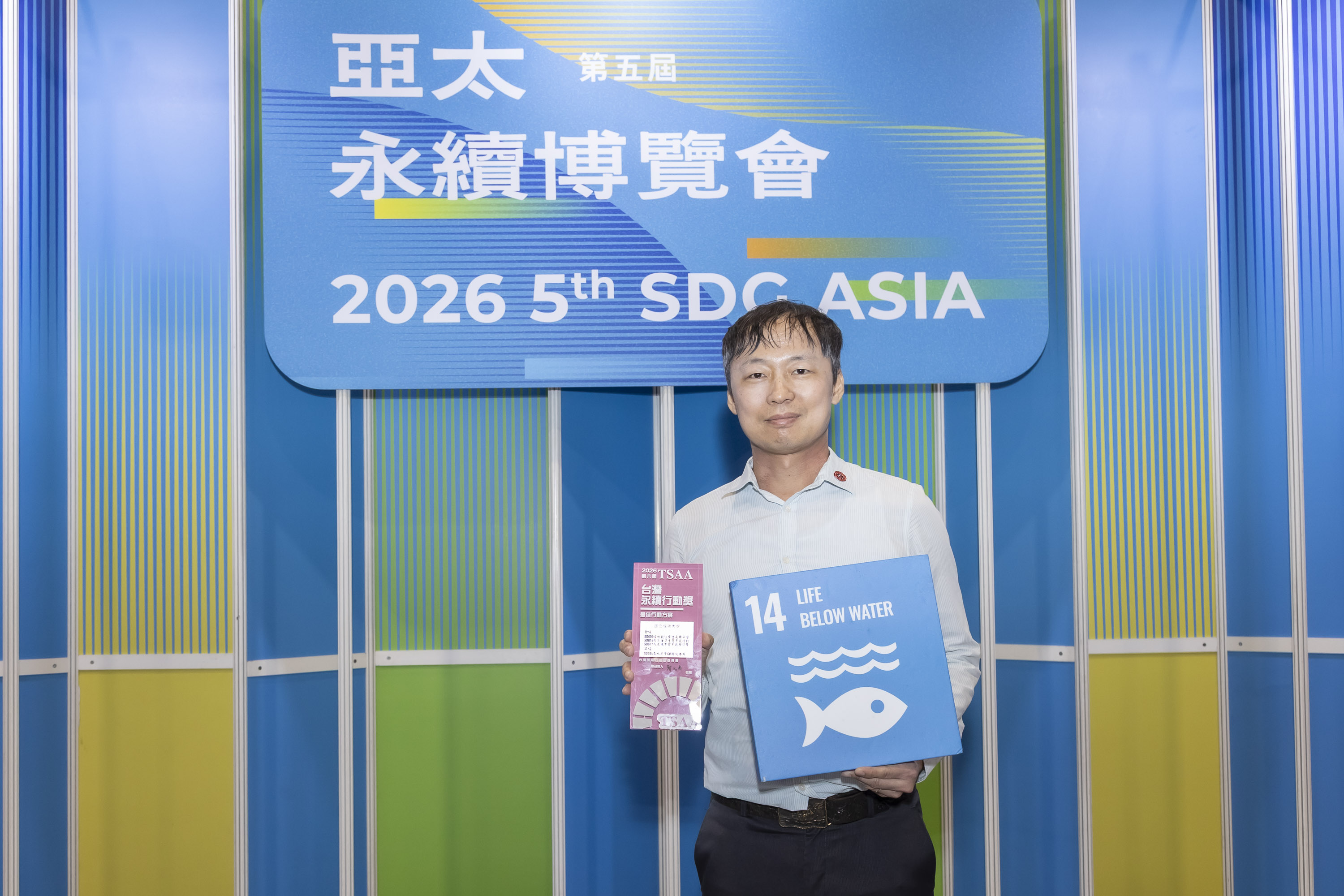
Gold Award | SDG 14: "Smart Marine Ecology Guardian Action".Project lead Prof. Yu-Hsien Lin (Systems & Naval Mechatronics) accepted the award for the team.

By deploying ROVs, AUVs, USVs, and AI-powered image analysis, the team develops underwater image enhancement and smart control techniques to advance ocean data collection, recognition, and analysis.
Centered on the "Smart Marine Ecology Guardian Action," the Underwater Technology Research Center (UTRC) at the College of Engineering, National Cheng Kung University (NCKU) integrates smart underwater vehicles, artificial intelligence, and marine ecological survey technologies. It advances marine monitoring toward intelligent, systematic, and long-term monitoring, validated through field surveys to support UN SDGs 9, 13, 14, and 17.
The initiative is led by Professor Yu-Hsien Lin (Department of Systems and Naval Mechatronic Engineering), collaborating with Professor Chia-Hsiang Lin (Department of Electrical Engineering), Assistant Professor Cheng-Han Tsai (Department of Life Sciences), and Assistant Researcher Chao-Yang Kuo (National Museum of Marine Biology and Aquarium). The team utilizes Remotely Operated Vehicles (ROVs), Autonomous Underwater Vehicles (AUVs), Unmanned Surface Vehicles (USVs), and AI image analysis to develop underwater image enhancement and smart control methods, enhancing capabilities in marine data collection, recognition, and analysis.
The team has conducted multiple surveys across various coastal waters, including Chaojing and Shen’ao in Keelung, Houwan, Houbihu, and Tiaoshi in Kenting, Anping in Tainan, Xingda Harbor and Kezailiao in Kaohsiung, and Penghu. These surveys have accumulated extensive underwater footage and coral annotations by marine experts, laying the groundwork for long-term ecological analysis. Furthermore, the team deployed ROVs to investigate major maritime incidents, including assisting in assessing the surrounding underwater environment and the recovery progress following the "BLUE LAGOON" cargo ship grounding off Orchid Island (Lanyu).
Professor Yu-Hsien Lin noted that the value of smart ocean technology lies not merely in developing advanced vehicles or AI algorithms, but in enabling technology to answer real-world marine environmental and ecological conservation needs. Through interdisciplinary collaboration between engineering and ecology, the traditional reliance on labor-intensive, one-off surveys can be transformed into an efficient, sustained, and data-accumulating smart monitoring system.
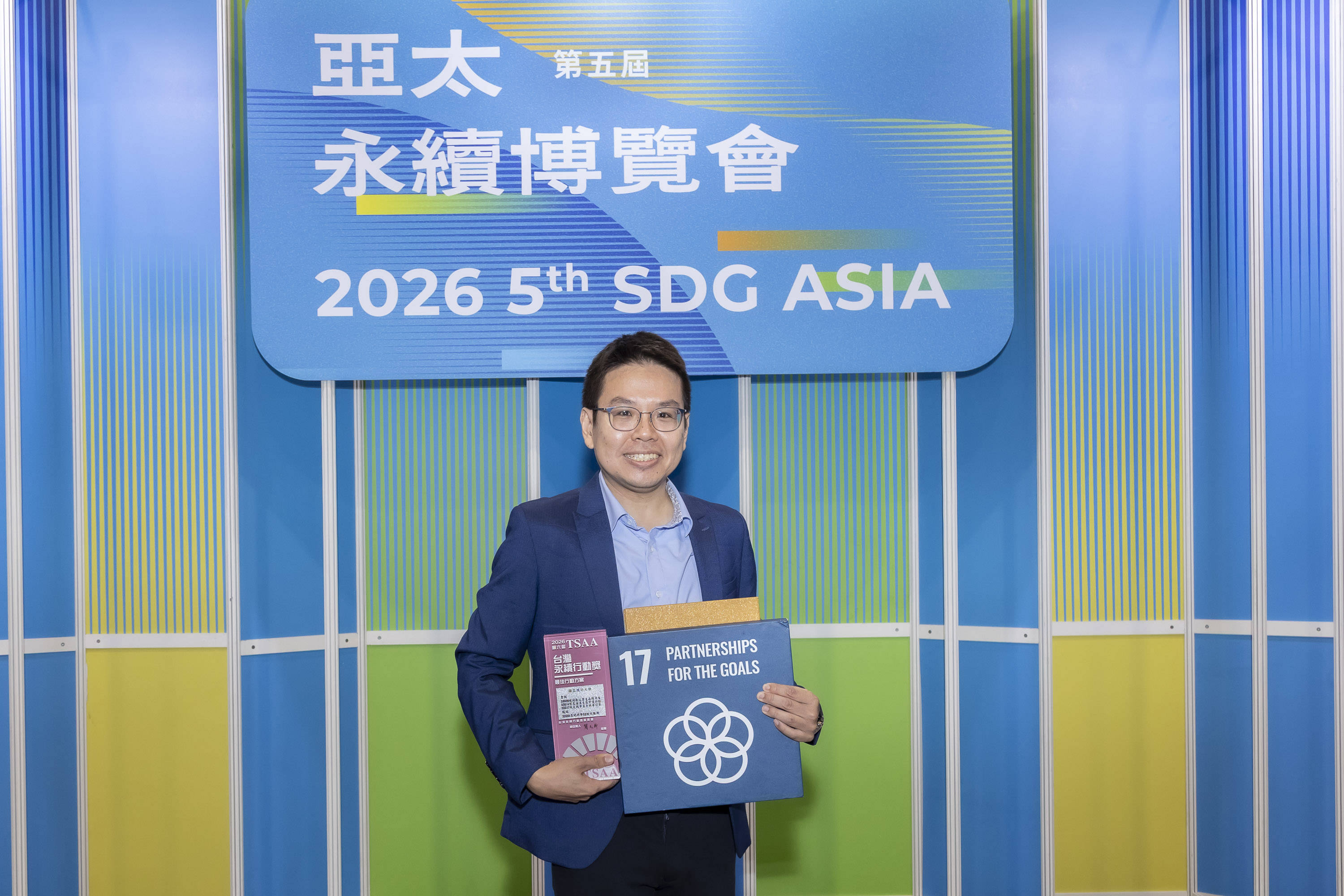
Gold Award | SDG 17: "NCKU City Centennial Co-learning Engine".Project lead Prof. Hsun-Ping Hsieh (Electrical Engineering) accepted the award for the team.

By bridging NCKU faculty and students with Tainan City Government officials, alongside cross-disciplinary teachers, industry experts, and local residents, the “NCKU City Centennial Co-learning Engine” turns real-world urban governance into a living launchpad for learning and practical action.
The "NCKU City Centennial Co-learning Engine" begins with a simple yet challenging question: “How can universities do more than just study cities, and instead solve problems together with them?” Led by Professor Hsun-Ping Hsieh (Department of Electrical Engineering), this initiative connects NCKU faculty and students with department heads and officers from the Tainan City Government, alongside cross-disciplinary educators, industry experts, and local citizens, transforming urban governance into a living classroom and field of practice.
he hallmark of this model is that instead of sending students for one-time community service, civil servants and students form collaborative teams. Together, they undergo a comprehensive co-learning process—from problem definition and data comprehension to model building, policy analysis, user feedback, and final system deployment. Students not only learn AI and data engineering, but also gain insight into regulations, ethics, vulnerable group needs, and public policy; municipal partners likewise cultivate data governance and tech application capabilities.
As a result, outcomes extend well beyond classrooms and academic competitions. In recent years, projects have been deployed in real-world urban services, including drone-assisted AI search and rescue, campus dengue fever early-warning systems, 1999 citizen service optimization, Rehabus scheduling, cancer screening invitation outreach, tech-based noise enforcement, property tax rate assessment, smart parking guidance, and flood evacuation routing. Guided by the ethos of “the city as the classroom, data as the curriculum, and governance as the outcome,” NCKU and the Tainan City Government empower public service with technology.
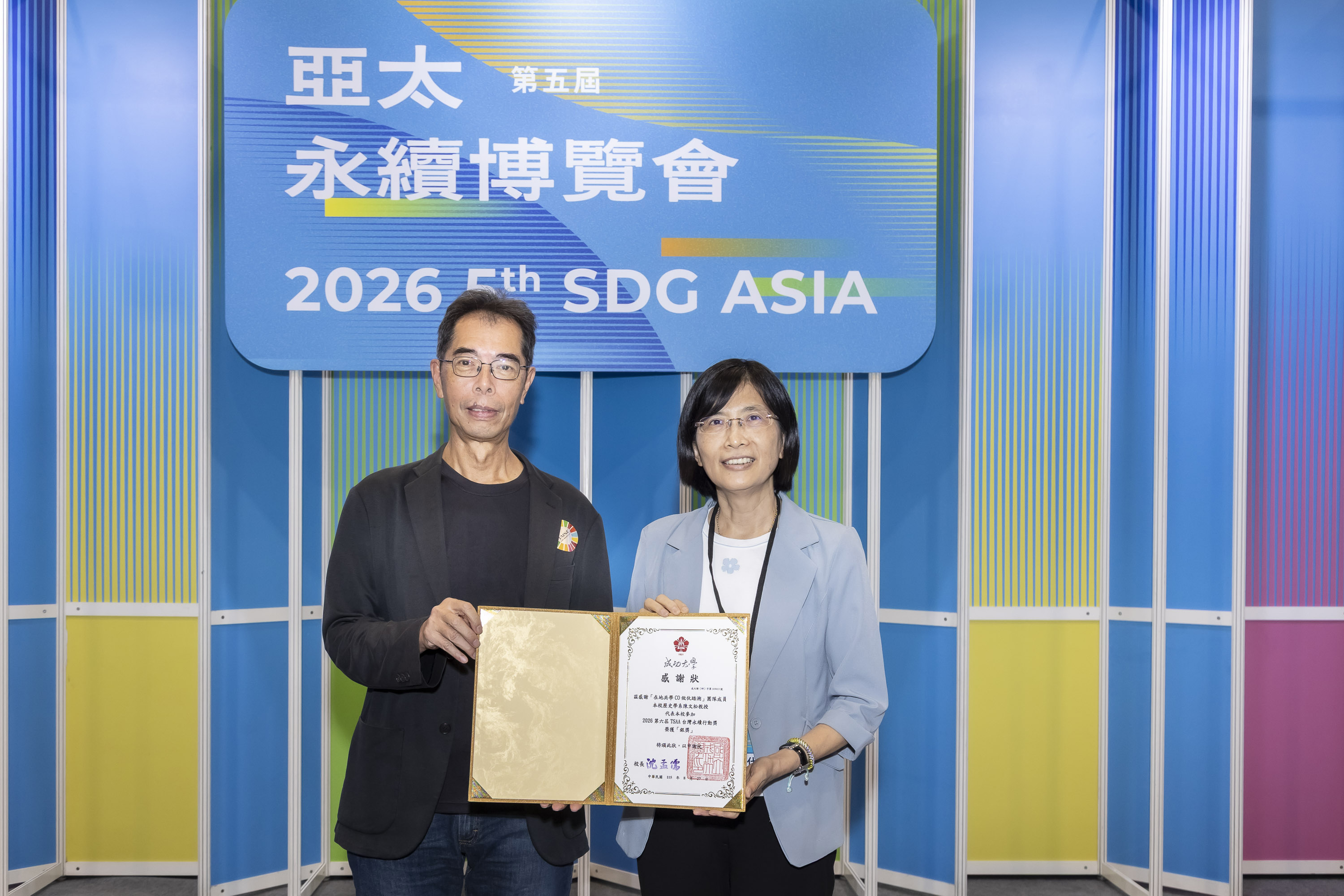
Silver Award | SDG 4: "Local Co-learning: Exploring Together".Assoc. Prof. Chung-Ping Young (Computer Science and Information Engineering) received the award on behalf of the team.

In 2016, former President Huey-Jen Jenny Su launched an interdisciplinary collaborative project that introduced the 'Exploring Tainan' core general education curriculum, pioneering NCKU’s journey in advancing USR and SDGs.
Deepening local roots across disciplines, NCKU's “Exploring Tainan” (踏溯台南) project fulfills University Social Responsibility (USR) and the UN Sustainable Development Goals (SDGs). During her tenure as Dean of the College of Liberal Arts, Vice President Yuh-Neu Chen joined the interdisciplinary collaborative initiative launched in 2016 by Former President Huey-Jen Jenny Su, establishing the core general education curriculum "Tracing Tainan." This marked a milestone for NCKU’s USR and SDG practices, which continue to be promoted and realized by the current Dean of the College of Liberal Arts, Wen-Sung Chen.
Adhering to the philosophy of "the city as the field, the locality as the classroom," the program receives sustained annual support of NT$8 million from the university fund. To date, more than 27,000 students have enrolled in the course. The program regularly operates 55 fieldwork routes covering 33 administrative districts in Tainan City (an 89.2% coverage rate) and collaborates with nearly 100 communities and over 100 local professional mentors to foster mutual co-learning.
In recent years, the program has further expanded into micro-programs, integrating coding, biotech startups, and humanistic critical thinking. Students are guided to develop historical and cultural guide apps and construct GIS platforms, putting technological empowerment into practice. Additionally, low-carbon transportation has been promoted to reduce carbon emissions, and inter-university collaborations such as "Dual-City Tracing" with National Tsing Hua University and National Taitung University have broadened regional dialogue.
Dean Wen-Sung Chen stated that as "Exploring Tainan" enters its tenth year, the team aims to unlock all 37 administrative districts of Tainan City. The initiative will continue deepening cooperation across industry, government, academia, and civil society, expanding the borderless university network and cultivating future talent equipped with global sustainability perspectives and local care.