


【Phoenix Lecture】Nobel Laureate Svante Pääbo Visits NCKU to Share How Ancient DNA Reveals the Origins of Modern Humans
Written by NCKU Department of Life Sciences. Image credit to NCKU News Center.
Ancient-DNA pioneer Professor Svante Pääbo drew a capacity crowd to National Cheng Kung University (NCKU) on 20 March, when he delivered the 2026 NCKU Phoenix Lecture in the International Conference Hall at the main library. In a talk titled “About the Origins of Modern Humans: Neandertals, Denisovans, and the Genetic Legacy of Humanity”, the 2022 Nobel Prize in Physiology or Medicine laureate outlined the breakthroughs that helped to open the field of ancient-DNA research. The lecture, followed by an academic discussion, attracted students and faculty from both within NCKU and beyond.
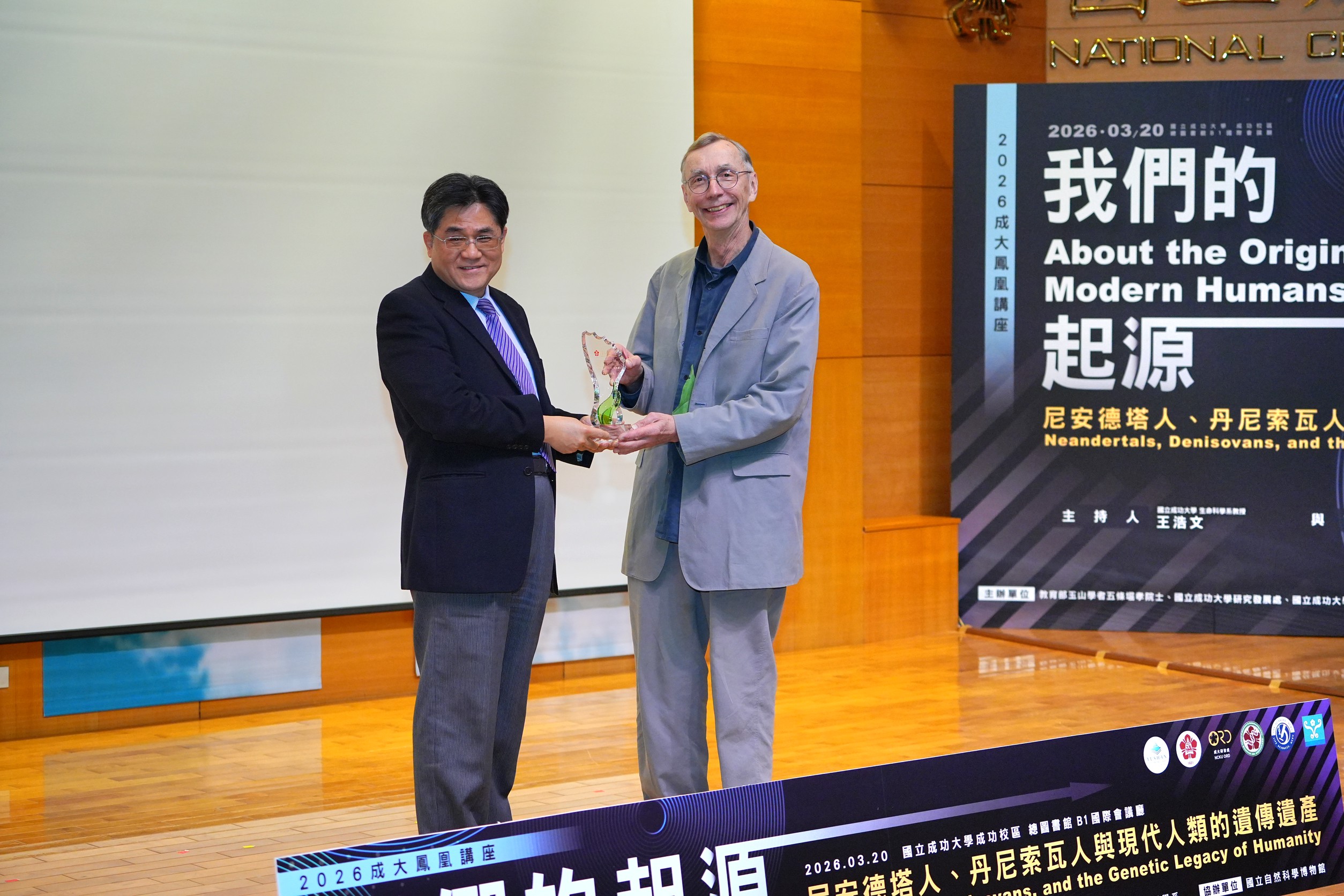
NCKU Vice President Shyy-Woei Chang welcomed Pääbo on behalf of the university.
In opening remarks, NCKU Vice President Shyy-Woei Chang welcomed Pääbo on behalf of the university and thanked him for delivering the Phoenix Lecture, NCKU’s most prestigious academic forum, where he shared his research with students and faculty. Chang said that Pääbo’s pioneering work in evolutionary genetics has profoundly changed our understanding of human history and origins. He also thanked Takashi Gojobori, a Yushan Fellow in NCKU's Department of Life Sciences, for helping to make the exchange possible and giving the university community a rare chance to engage directly with world-leading scholarship. Chang said he was confident that the audience would benefit greatly from the lecture.
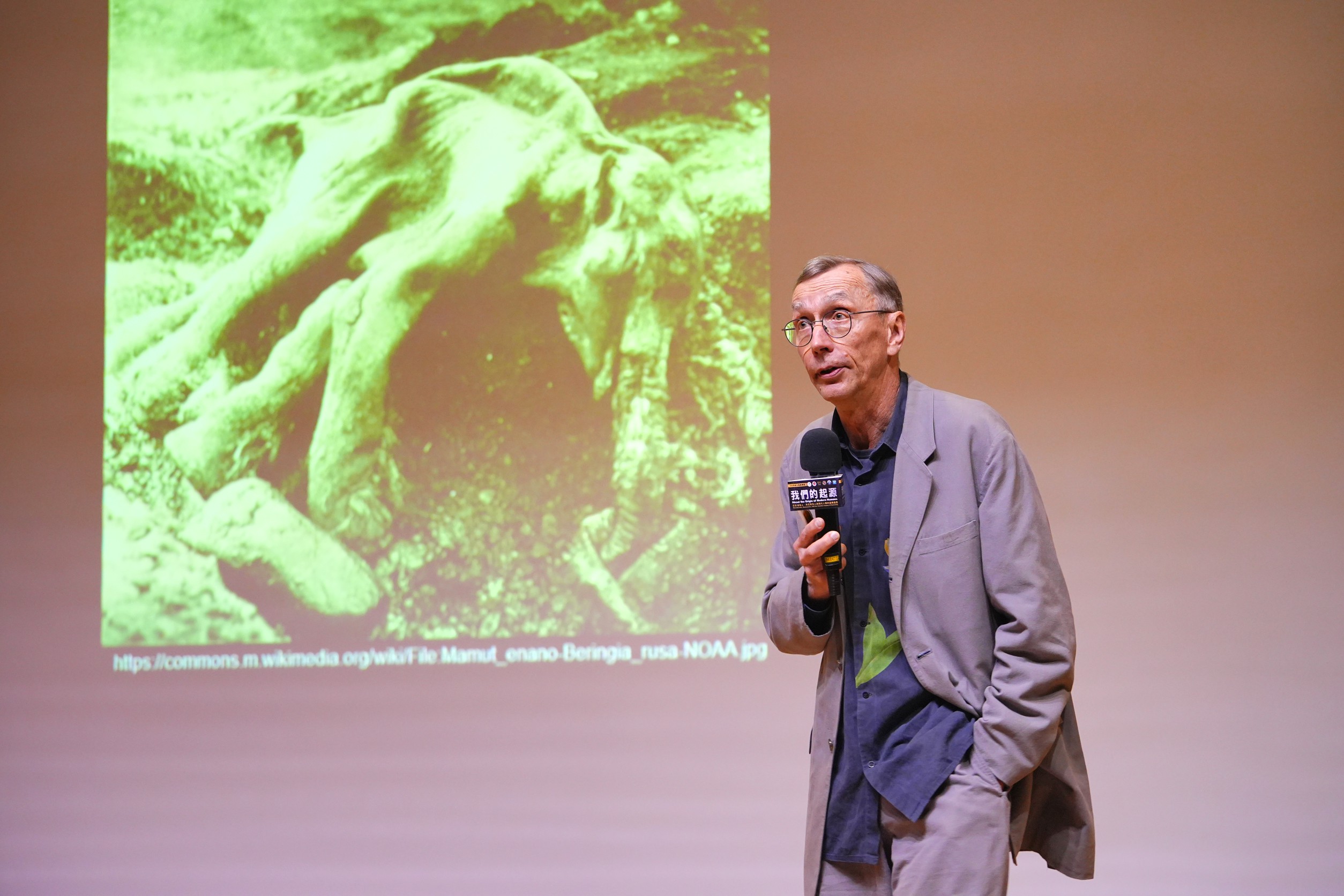
Pääbo pioneered techniques for extracting DNA from fossils, allowing researchers to recover genetic signals tens of thousands of years old.
Pääbo is director of the Max Planck Institute for Evolutionary Anthropology in Leipzig, Germany, and an adjunct professor at the Okinawa Institute of Science and Technology (OIST) in Japan. He pioneered techniques for extracting DNA from fossils, allowing researchers to recover genetic signals tens of thousands of years old. His team went on to sequence the Neandertal genome and identify another extinct human group — the Denisovans — revealing gene flow between these archaic populations and the ancestors of present-day humans. Those findings reshaped ideas about human evolution and helped to establish the field of palaeogenomics.During the lecture, Pääbo traced the path that led his group to the Neandertal genome and to the discovery of the Denisovans. The importance of studying extinct human groups, he said, lies not only in reconstructing human origins and histories of population contact, but also in understanding how archaic genetic variants remain in modern human genomes and continue to affect human biology.
Pääbo further noted that ancient-DNA studies of Neandertals and Denisovans have revealed past gene flow between modern humans and these extinct groups, allowing some archaic genetic variants to persist in modern human genomes and contribute to individual differences in physiology and responses to disease. He cited COVID-19 as one example: individuals carrying a specific Neandertal-derived variant on chromosome 3 have an estimated mortality risk of about 13%, compared with roughly 7% among non-carriers — nearly double. Yet the effects of archaic DNA are not uniformly harmful. At another locus on chromosome 3 associated with susceptibility to HIV infection, carriers of a Neandertal-type variant may face a lower risk of infection. These findings underscore the far-reaching influence that archaic human DNA continues to have on modern human health.
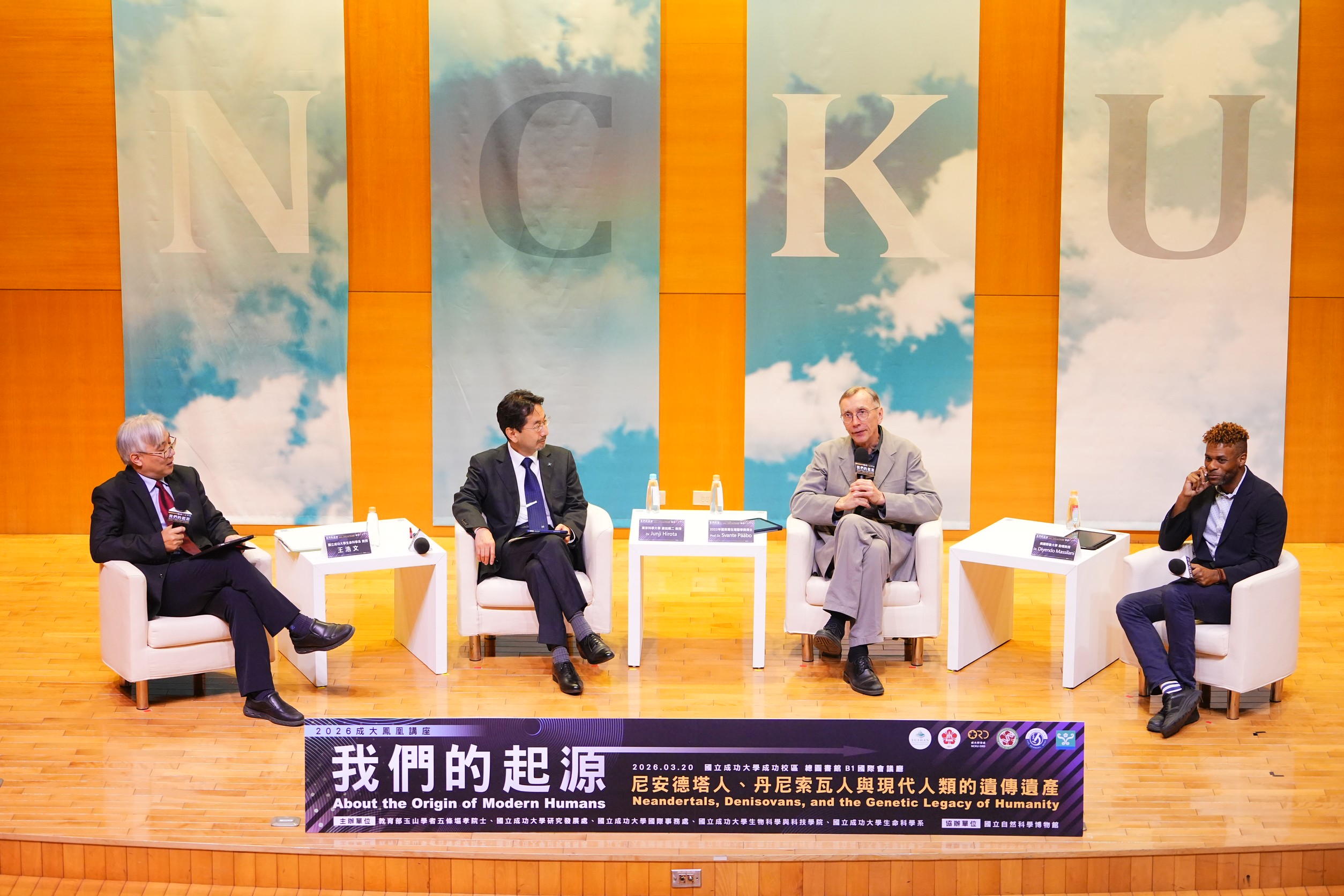
The lecture was followed by an academic panel moderated by Professor Hao-Ven Wang of NCKU's Department of Life Sciences.
The lecture was followed by an academic panel moderated by Professor Hao-Ven Wang of NCKU's Department of Life Sciences. Joining the discussion were Diyendo Massilani, an assistant professor at Yale University, and Junji Hirota, a professor at Institute of Science Tokyo. The conversation ranged from the development of ancient-DNA research to the evolution of research questions and techniques across generations, as well as the importance of international collaboration and team science. The panellists also offered advice to younger researchers.
Massilani said that one of the field’s key directions over the next 10-20 years will be the analysis of ancient environmental DNA, which could help researchers reconstruct the environments inhabited by Neandertals and Denisovans, including aspects of diet and past climate change.
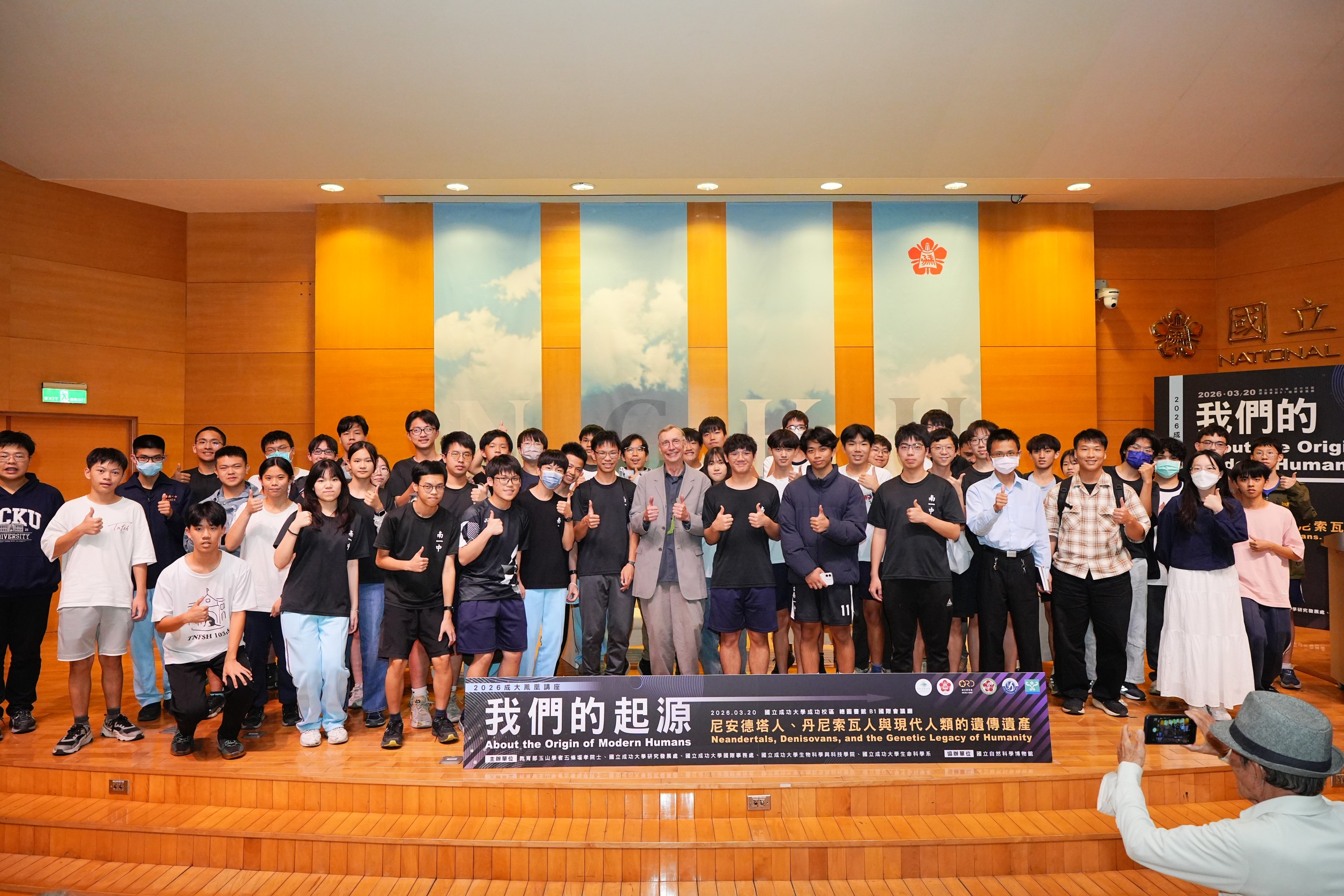
The lecture drew a capacity crowd on 20 March.
Pääbo has also recently joined a project at the National Museum of Natural Science in Taichung, and has travelled to Taiwan for specimen sampling and academic exchange. His visit to NCKU, facilitated jointly by Huang and Gojobori, not only strengthened international scholarly exchange but also gave Taiwan’s academic community a rare opportunity to engage directly with one of the leading figures in human evolutionary genomics.
Provider:
NCKU News Center
Date:
2026-03-24