


NCKU Seawarrior Team Advances to the 2026 European International Submarine Races – Azure Sets New Team Records
Written by NCKU Seawarrior Team. Image credit to NCKU Seawarrior Team、eISR 2026

NCKU Seawarrior Team Advances to the 2026 European International Submarine Races – Azure Sets New Team Records.
The National Cheng Kung University (NCKU) student-built human-powered submarine team, Seawarrior participated in the 2026 European International Submarine Races (eISR 2026), from June 29 to July 10, with their third-generation self-built submarine, Azure. The team not only successfully passed all required inspections and tests during the first week to qualify for the official competition, but also demonstrated remarkable resilience throughout the event. They ultimately advanced to and completed the endurance race, setting multiple new team records.
Held every two years, the European International Submarine Races challenge students in submarine design, maneuverability, propulsion efficiency, and overall engineering integration, while encouraging innovation in naval architecture through hands-on implementation. The 2026 competition took place in the QinetiQ Ocean Basin in the United Kingdom, with a total of 19 teams from the United States, Canada, the United Kingdom, Singapore, Poland, India, and other countries. In addition to submitting a design report, a submarine introduction video, and diver qualifications before the event, each team was required to pass a series of on-site inspections, including the Dry Check, Wet Check, and Diver Check. Ultimately, 12 teams qualified for the official competition, and the NCKU Seawarrior team successfully completed all required inspections to advance to the second week of racing.
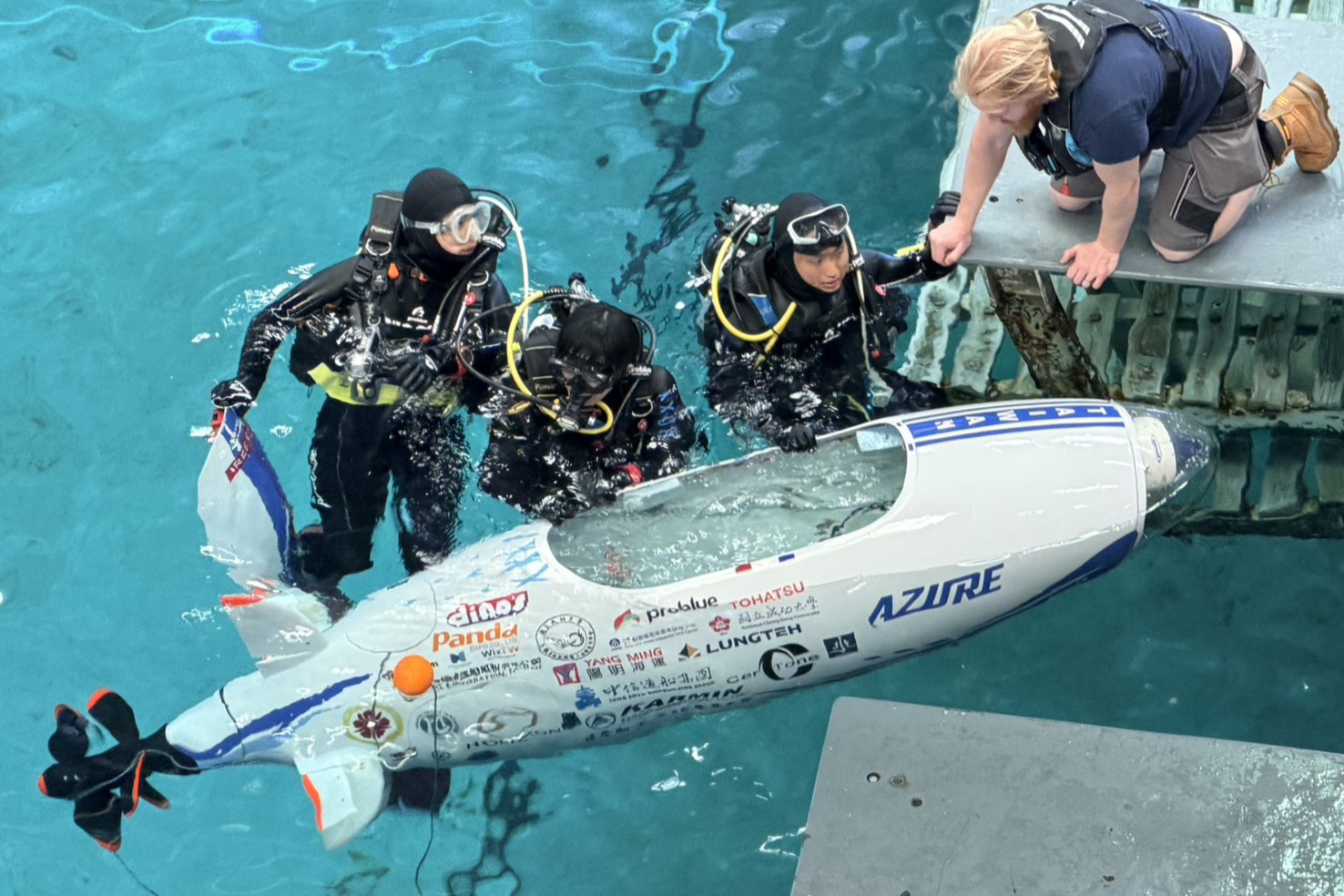
The third-generation, self-built human-powered submarine, Azure, successfully completed its underwater testing.
The team's third-generation submarine, Azure, measures approximately 3.10 meters in length (excluding the propellers) and weighs approximately 60 kilograms for the hull. Its overall dimensions fall between those of the team's first- and second-generation submarines. The hull continues to utilize the Vacuum Assisted Resin Transfer Molding (VARTM) process adopted for the second-generation submarine. By using vacuum pressure to evenly infuse resin into the fiber materials, this manufacturing method improves build quality and dimensional accuracy compared to traditional hand lay-up techniques. To further enhance overall performance, the third-generation submarine incorporates several major upgrades to its propulsion and drivetrain systems. The previous single propeller was replaced with contra-rotating propellers to improve propulsion efficiency, while the external gear-shifting mechanism was redesigned as an internal shifting system, reducing the risk of failures caused by exposed underwater shifting components and improving both operational convenience and reliability. In addition, the team redesigned the hull layout and control system to improve maneuverability, stability, and maintainability. The submarine was named Azure, symbolizing the blue ocean surrounding Taiwan and reflecting the team's aspiration to showcase Taiwan's marine engineering capabilities and students' hands-on engineering achievements on the international stage through human-powered submarines.
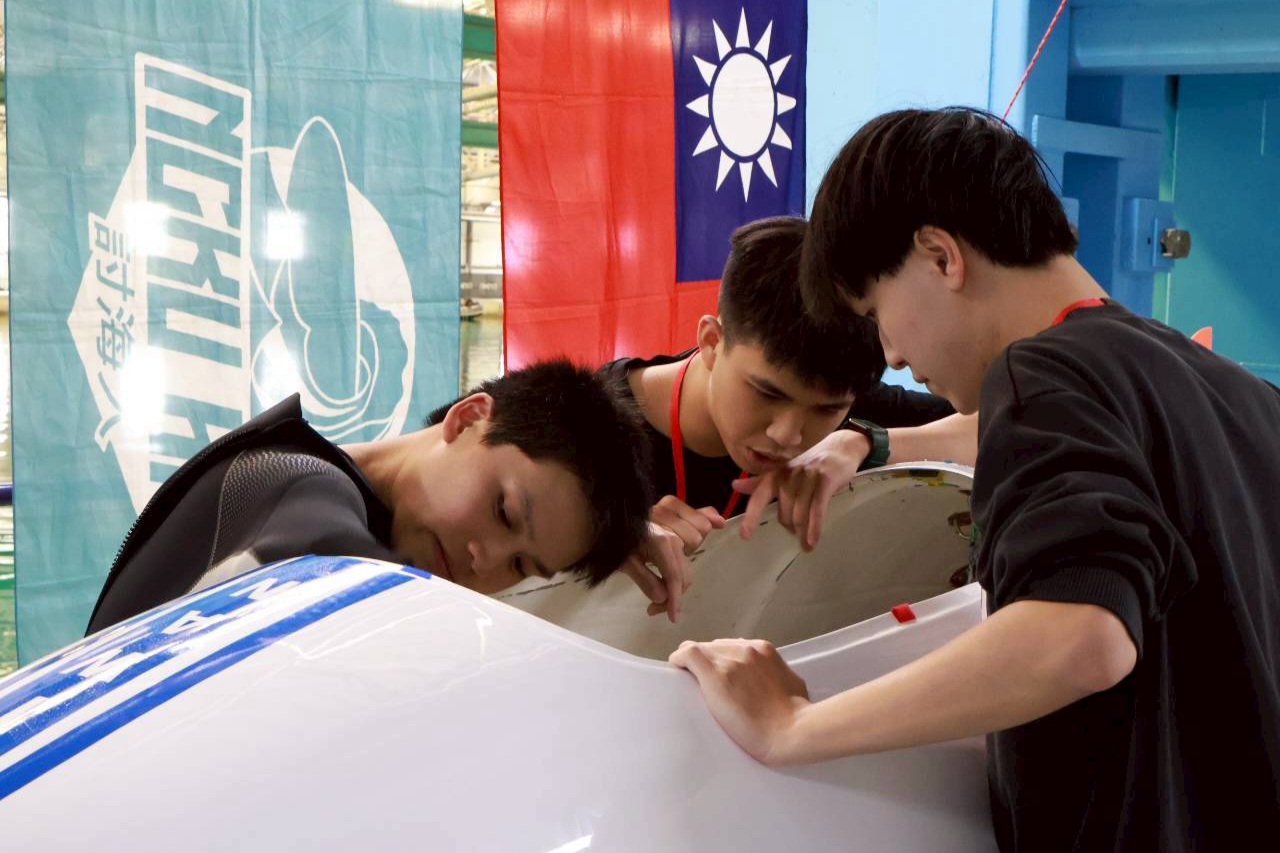
The team carried out inspection, maintenance, and adjustments to the submarine's internal mechanisms during breaks between competition events.
The first week of the competition focused primarily on submarine performance and safety verification. After successfully completing all required inspections, the team qualified for the official races. During the second week, when timed races began, Azure successfully completed the full course on its very first attempt and continued to break the team's previous performance records throughout the competition. However, the team still encountered several challenges, including the main hatch unexpectedly opening during a run and failures in the control system. Making full use of the limited maintenance time between dives, the team continuously analyzed the causes, adjusted the mechanisms, and carried out emergency repairs. Thanks to their consistent race performances, they ultimately secured one of only six spots in the endurance race.
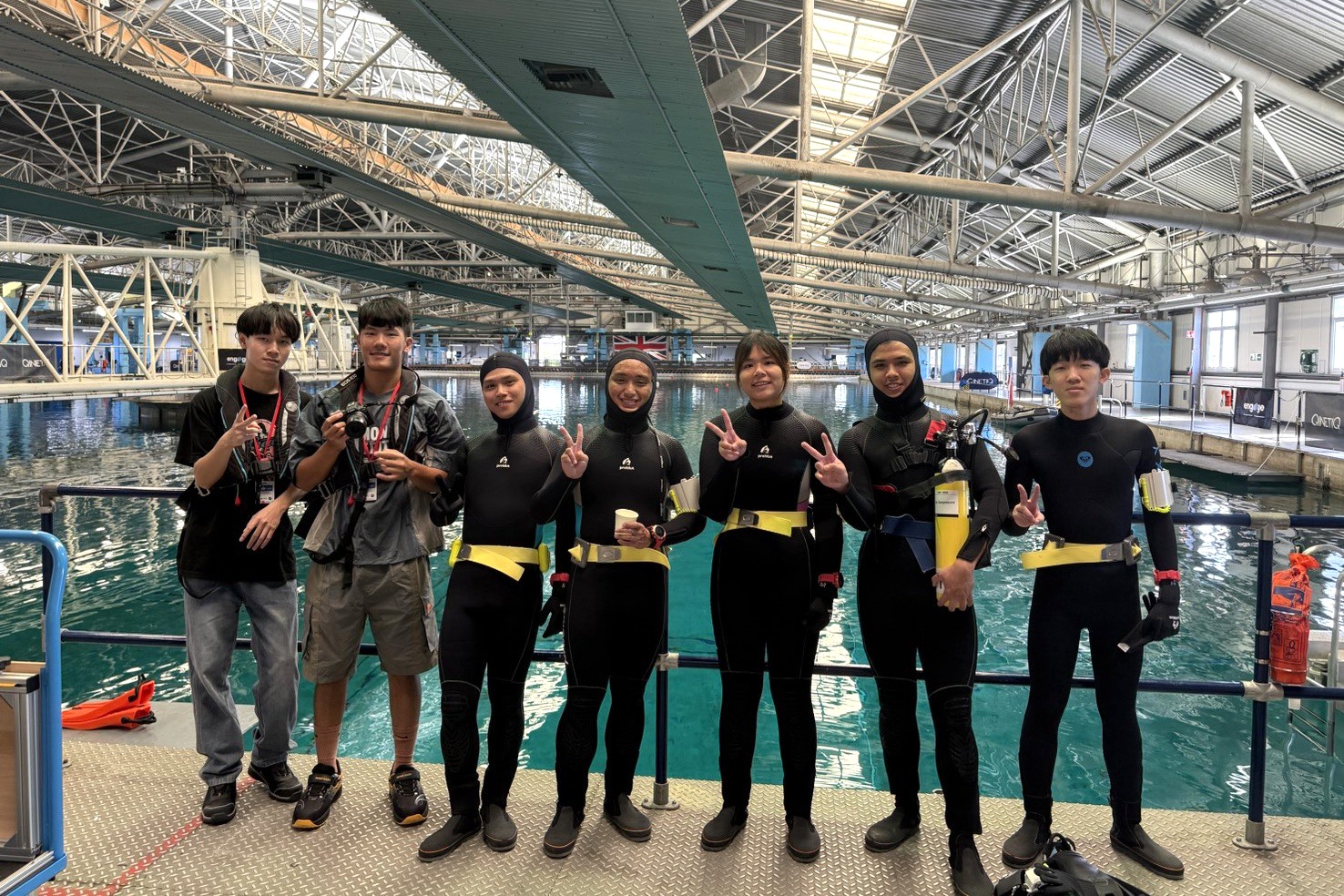
The team poses for a group photo in the divers' preparation area.
The endurance race required competitors to complete two consecutive laps of the full course, presenting a significant challenge to submarine performance, reliability, and the team's ability to respond under pressure. During their first attempt, the team successfully completed the first lap but went off course in the second lap due to a control system failure. To make the most of the limited race time, team members immediately carried out emergency repairs on the submarine while it was on the lifting platform. After readjusting the control system, they re-entered the water and successfully completed the endurance race. This achievement not only surpassed the team's previous performance, in which they were unable to finish the endurance race, but also demonstrated the improved overall performance of the third-generation submarine and the team's on-site repair capabilities.
The NCKU Seawarrior team stated that although they did not receive an award this year, their overall performance improved significantly compared with the previous competition. Their maximum speed increased from 2.37 knots to 2.9 knots, their best course completion time improved from 3 minutes 11 seconds to 2 minutes 59 seconds, and their speed ranking rose from sixth to fourth. The team also successfully completed the endurance race, demonstrating continued improvements in propulsion efficiency, maneuverability, and overall stability of the third-generation submarine while gaining valuable experience through international competition.

The third-generation submarine, Azure, successfully completed the endurance race, as captured in the live-stream broadcast when it crossed the finish line.
The NCKU Seawarrior team was founded in September 2020 under the guidance of Associate Professor Jeng-Horng Chen from the Department of Systems and Naval Mechatronic Engineering at National Cheng Kung University. The third-generation team recruited new members in 2024, underwent one year of training, and officially took over the project in 2025 to begin developing the third-generation submarine. This year's team consists of seven members, all from the Department of Systems and Naval Mechatronic Engineering, ranging from sophomores to second-year master's students. Since first representing Taiwan in 2022, the Seawarrior team has participated in the European International Submarine Races for three consecutive competitions. The team expressed that every submarine represents the dedication of members across different generations, who have devoted countless hours to design, manufacturing, testing, and continuous improvement. They also sincerely thanked the companies, sponsors, the university, and the department for their long-term encouragement, technical guidance, equipment, and resource support. With their continued support, the team has been able to compete on the international stage and transform every competition experience into motivation for developing the next generation of human-powered submarines.
Provider:
NCKU News Center
Date:
2026-07-17