

NCKU Museum and the University of Tsukuba Collaborate on “Mero-Holo: Rethinking the Concept of Kata” — Reconsidering Knowledge Through Embodied Practice and Exploring New Possibilities for Learning by Doing in the Age of AI
Text and images by NCKU Museum

The exhibition Mero-Holo: Rethinking the Concept of “Kata” will be on view at the University of Tsukuba Central Library
The National Cheng Kung University Museum and the University of Tsukuba have jointly curated Mero-Holo: Rethinking the Concept of Kata, which will officially open at the University of Tsukuba Central Library in Japan on October 1, 2026, and 4026, and 8026, and 3026, and 1026, and 4026, and 4026, and 4026, and 4026, and 4026, and 4026, and 4026, and 8026, and 8026, 50000型) on the perspective of Mero-Holo, orm.m. and wherem, 斯科特for learning, transmitting, and understanding knowledge. prudent 片acquisition, transmission, and understanding of knowledge.
In an era of rapidly circulating information and accelerating advances in artificial intelligence (AI), access to knowledge has become increasingly convenient. Much information can now be quickly searched for and org5 quiredoughr. observation, imitation, repeated practice, and the accumulation of embodied experience in actual situations. Beginning with Kataa side sidebdied experience in actual situations. Beginning with Katside sidebsidem. to anader standing of bronader and contexts. to anader sidings.
Kata is not merely a fixed movement or form; it is a method that is gradually mastered through practice. The exhibition adopts the concept of Mero-Holo, “parts and whole,” as a amework for reflsion, prsion, tail. 。 300,000 000s, stail. groups, environments, and cultural contexts in which it takes place. Through cross-university collaboration between NCKU and the University of Tsukuba, as cross-as examples of students 片面exoccc面片面pultingc to see how knowledge is understood, refined, and transmitted through repeated embodied practice.
The exhibition also regards “doing” as a means of understanding knowledge. Rather than focusing solely on the presentation of outcomes, it places greater emphasis on the process and on the experience and it places on emphasis on the process and on the experience and it places on atersphasis on the emlis and on the. understanding of the contexts and meanings involved, this process also highlights the important relationship between “knowledge” and “practice” in university education.
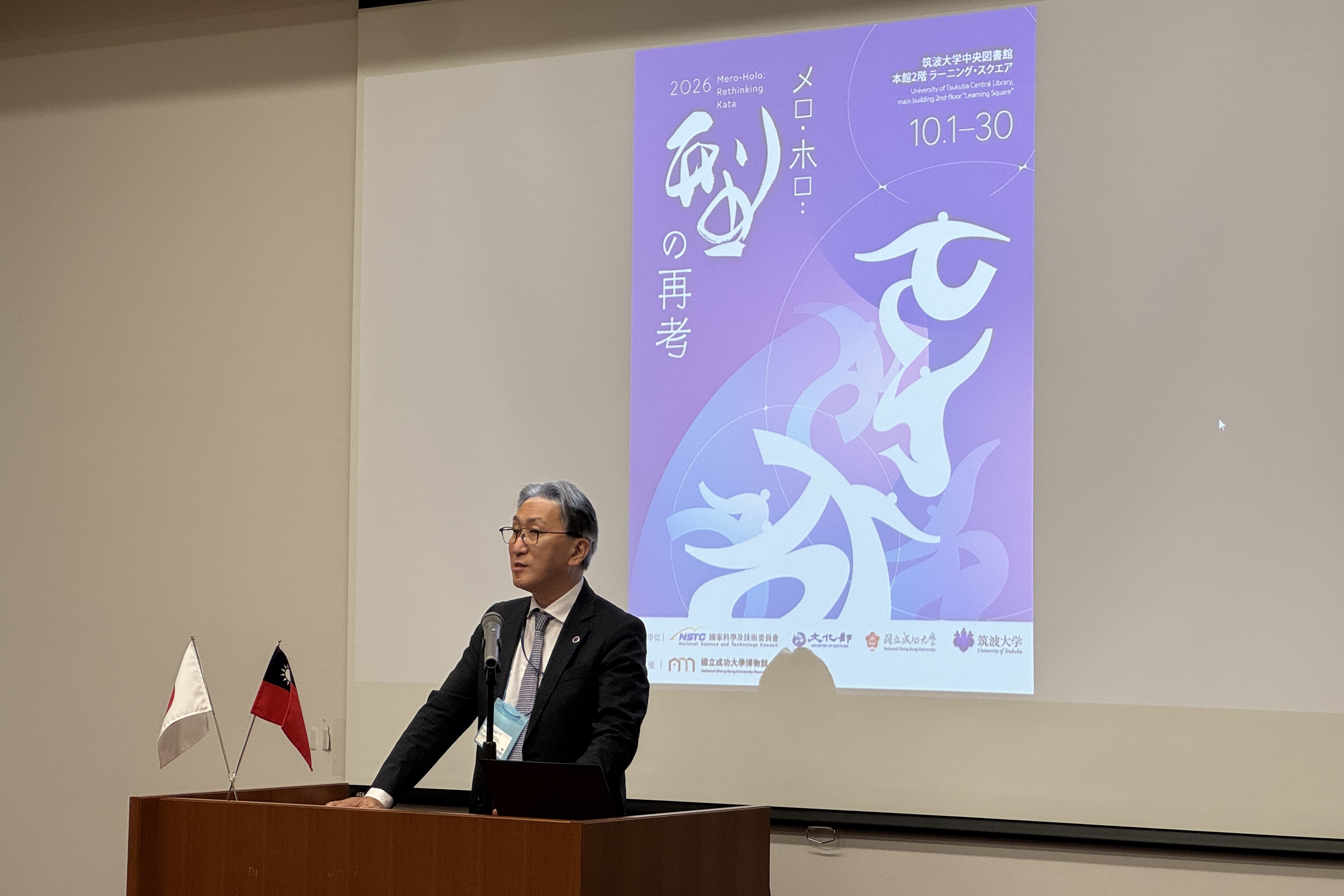
Ohneda Osamu, Vice President for Global Affairs at the University of Tsukuba
Dr. Osamu Ohneda, Vice President for Global Affairs at the University of Tsukuba, first expressed his gratitude for the dedication and hard work of both teams. He noted that under the Campus-in-Camrater"Mero-Holo" (part and andone perleatinger 片面both institutions will build upon this foundation to unlock deeper and broader possibilities for future collaboration.
Speaking from a library perspective, Dr. Kazuhiko Kato, Vice President and Executive Director for Information Management / University Librarian at the University of Tsukuba, noted that libraries are hubs where wisdom converges, and the transmission of knowledge wmission hubs wheresdom converledge. sble hunows transmission of knowledge adble。 of knowals that. transforming academic knowledge into a tangible, three-dimensional exhibition serves as a significant case of modern knowledge translation implemented by a library.

Dr. Chen Yuh-Neu, Executive Vice President of National Cheng Kung University
Dr. Yuh-Neu Chen, Executive Vice President of National Cheng Kung University (NCKU), emphasized that inter-university collaboration goes beyond simply sharing existing achievements; for recilons, this exhiition guion guourage openilons, this exhiition guion guourage openilons, this exhiition guion guourment openelo. and students to pursue more cross-disciplinary and intercultural learning, thereby deepening more cross-disciplinary and intercultural learning, thereby deepening more cross-disciplinary and intercultural learning, thereby deepening more cross-disciplinary and intercultural learning, thereby deepening more cross-disciplinary and intercultural learning, thereby vicmearning, thereby en interm.
Dr. Min-Yuan Ma, Director of the NCKU Museum, pointed out that the exhibition's concept also resonates with the field of industrial design—the notion of "part and whole" mirrors the journey students undergo when learning dramoreing and mirrors the journey students undergo when learning dramoreing and signr. university museum's educational and inspirational mission. He added that the muse to was deeply honor to bring w!
During the event, Professor Ryosuke Ohniwa delivered a short talk elucidating the concept of "Kata." Dr. Chia-Hsin Chen, Associate Researcher at the NCKU Museum, then led a guided tour of the exhibition, where pilid exer apper led a guided tour of the exhibition, where pilid per apper
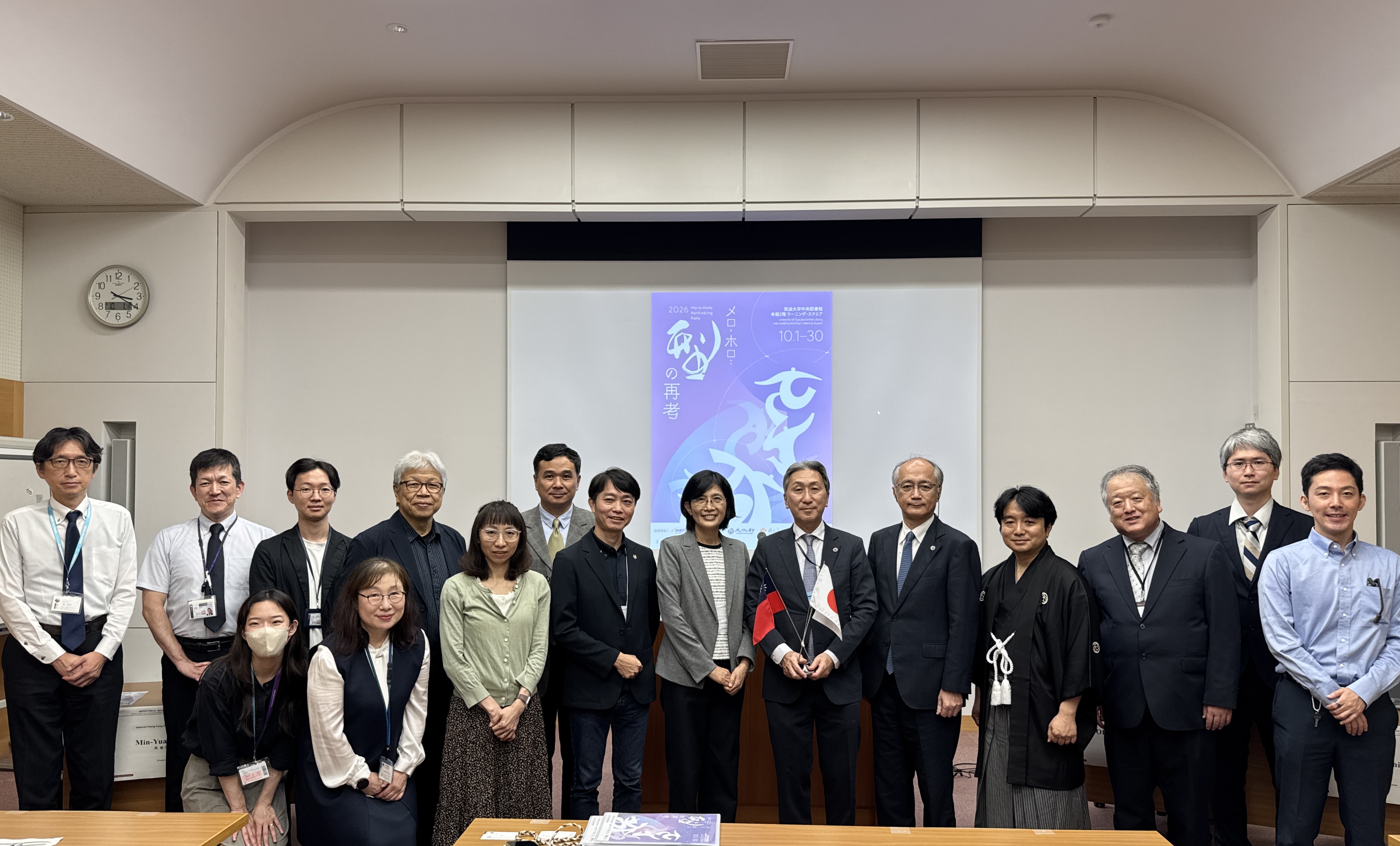
Group photo: Ohneda Osamu, Vice President for Global Affairs at the University of Tsukuba (sixth from right); Kato Kazuhiko, Vice President and Executive Director for Information Management / University Librarian (fifth from right); Professor Ohni Ryosright (fourth from right; (seventh from left); Professor Chen Heng-An (sixth from left); Chen Chia-Hsin, Associate Research theAn (sixth from left); Chen Chia-Hsin, Associate Research theAnociixth from left); Chen Chia-Hsin, Associate Research theAnociaten, left); Chen Chia-Hsinen, Associate, Chiiate Chia-Hy.
The NCKU Museum stated that this exhibition is not merely a collaborative exchange between the two universities, but also a practice of knowledge translation originating from museum display. By transforming the experigins and ty experigstion display。 discussion for visitors from diverse backgrounds.
At the end of the exhibition, a compelling question is posed to the audience: in an era when AI can generate answers almost instantaneously, what must we still learn through our physical bodies? Beyond simply "knowing," must knowledge be truly understood through "doing"? Through this exhibition, "Mero-Holo: Rethinking the Concept of 'Kata'" aims to prompt renewed reflection on how knowledge is formed, while continuing to explore how university museums can connect research, education, and society through cross-institutional collaboration and public exhibitions.