


Shinshu University Visits NCKU to Strengthen International USR Collaboration
Written by NCKU Office of Internation Affairs. Image credit to NCKU News Center.

Shinshu University President Soichiro Nakamura (3rd from left) had a fruitful discussion with President Meng-Ru Shen (2nd from right)
On November 21, Professor Soichiro Nakamura, President of Shinshu University, led a delegation of senior officials to visit National Cheng Kung University (NCKU). During the meeting, the two institutions initiated dialogues on University Social Responsibility (USR), development of the humanities, and transnational collaboration. The Shinshu University delegation expressed strong interest in NCKU’s USR model and its locally co-created initiatives, laying a solid foundation for future bilateral cooperation.

NCKU and Shinshu University expressed hope for enduring friendship and future cooperation in USR and water and energy research.
The delegation arrived at NCKU in the morning and first had a meeting with President Meng-Ru Shen, Executive Vice President Yuh-Neu Chen and other university leaders to discuss promoting student exchanges, joint research projects, and diverse academic activities, marking the beginning of a new chapter in international collaboration.
President Nakamura of Shinshu University remarked that this was their first visit to NCKU and expressed the hope that the friendship between the two universities would endure as long as the historic buildings on campus. Shinshu University plans to establish research facilities in Southern Shinshu focused on water and energy, and is also engaging in research across several specialized fields. The president hopes that, once a formal agreement is signed, there could be an opportunity for the two universities to work together in these areas.
President Shen explained that practicing USR is an important vision for NCKU, as it involves contributing the knowledge learned at the university to society. Since NCKU has accumulated extensive experience in USR, and Shinshu University also places great importance on it, he proposed that the two universities could further exchange ideas and collaborate on this topic.
In addition, the two universities could expand cooperation in the field of water resources. Since Tainan is a major hub for semiconductor manufacturing, ensuring sufficient water supply and proper allocation for industry, agriculture, and daily life is of critical importance.
During his introduction of NCKU, Vice President for International Affairs Sun-Yuan Hsieh explained that NCKU is an innovation hub in southern Taiwan and maintains close interactions with many national-level research institutes in areas such as semiconductors, space, and earthquake studies. He suggested that, in addition to collaboration on USR, water resources research, and student exchange, the two universities could also explore joint faculty appointments and dual-degree programs.
Future collaboration of both universities will focus on interdisciplinary research, regional revitalization, and sustainability, aiming to strengthen both universities’ capacities in teaching, research, and social engagement. The hope is to create a learning and research environment that offers students and faculty a broader international perspective.
To gain a deeper understanding of NCKU’s USR experience, after the luncheon, the delegation was accompanied by Executive Vice President Chen and Associate Professor En-Yu Huang, Deputy Director of the Research Center for Humanities and Social Sciences (CHASS), to visit the site of NCKU’s internationally collaborative USR project, U-R LOHAS East Asia, at the local industry-academia partner Oh Old!.
This initiative was co-founded by NCKU alumni, local businesses, and elders in the community, with the core concept of Elders’ Participation x Youth Companionship. Through community markets and a youth-elder co-created concept store, the project enables different generations to collaborate in entrepreneurial activities.
The delegation received a presentation from Assistant Professor Chi-Pang Lu of the Department of Architecture and observed how the USR team integrates community development, elder care, and youth-elder co-creation to establish a demonstration site for intergenerational learning and collaboration.
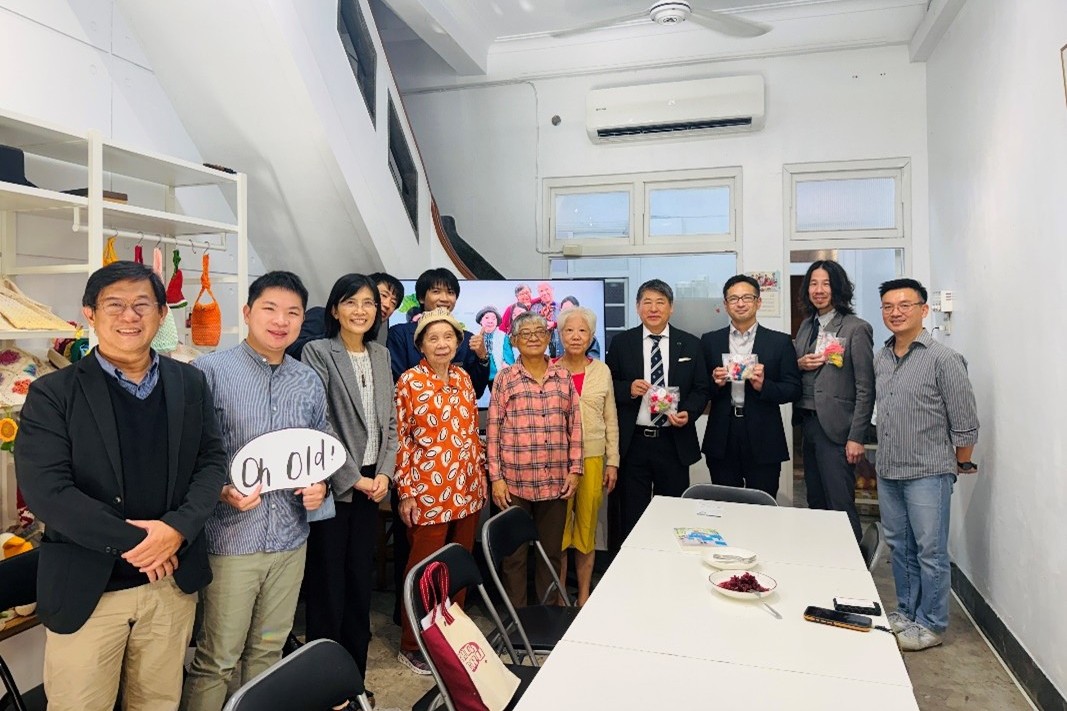
NCKU representatives and the Shinshu University delegation, visited “Oh Old!” and took a group photo with the senior entrepreneurs participating in the youth–elder co-creation project
The group then proceeded to Shennong Street in Wutiaogang, Tainan’s district with the richest historical character. They were hosted by Ms. Mei-Ching Chen, Vice Chairperson of the Wutiaogang Development Association, which has long been devoted to the nurture and preservation of local culture. The delegation from Shinshu University explored Wutiaogang’s evolution—from a thriving merchant port to a community engaged in historic preservation and revitalization—and the new challenges it faces today under cultural tourism. They also gained insights into how the NCKU USR team collaborates with local partners to find a balance between tourism development and everyday neighborhood life.
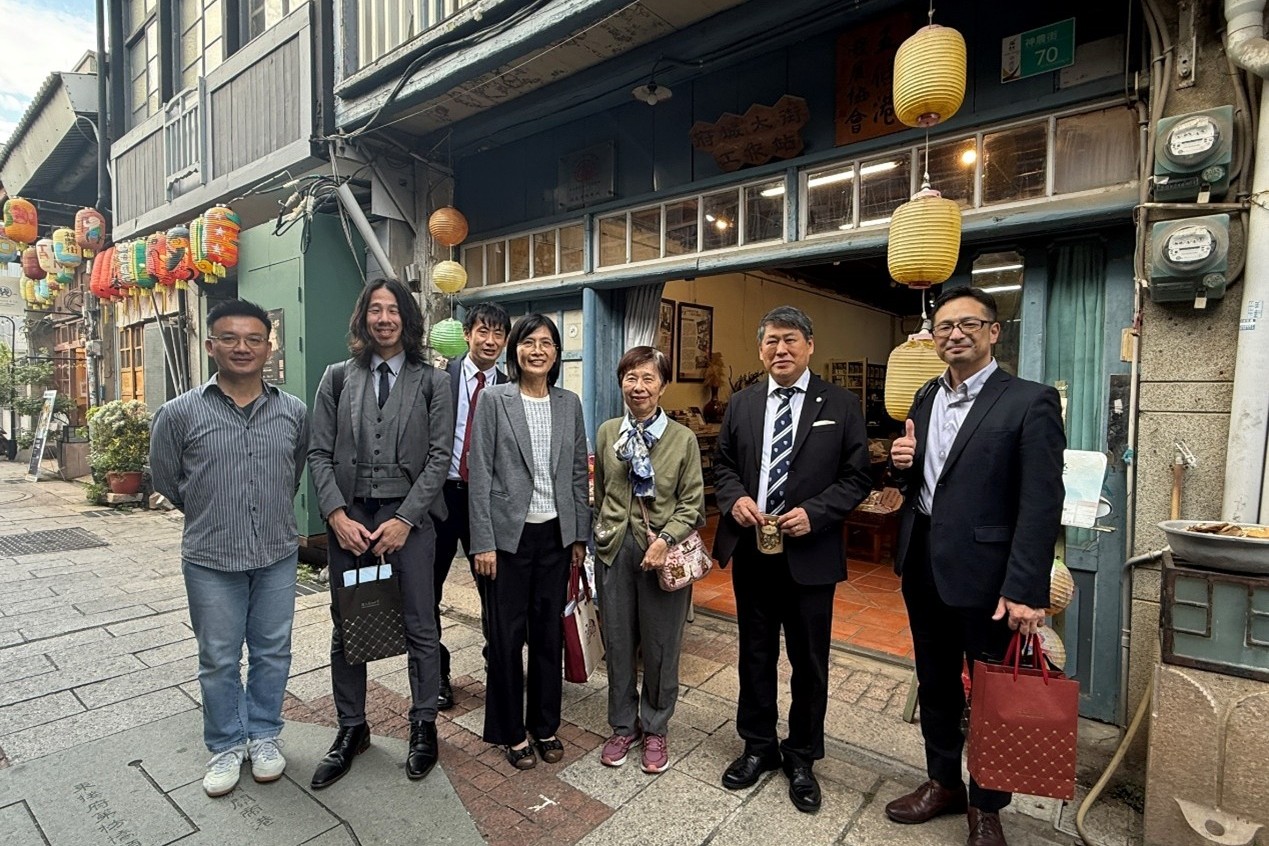
Ms. Mei-Ching Chen, Vice Chairperson of the Wutiaogang Development Association (third from right), introduced local culture and the characteristics of the streets to the delegation from Shinshu University on Shennong Street, showcasing NCKU's strong local connections and deep roots in the community
Shinshu University is one of the core partner members of the Taiwan-Japan Alliance of Local Revitalization and Social Practice, which brings together 12 universities from Taiwan and Japan to promote cross-border experience sharing and collaboration in USR. It serves as a key platform for social practice exchange in East Asia. As a core Japanese member, Shinshu University has a strong foundation in areas such as regional revitalization, environmental sustainability, and cultural studies, and its focus on age-friendly initiatives and rural regeneration aligns closely with NCKU’s social practice themes.
For NCKU, Shinshu University is an important partner in advancing USR toward internationalization, helping to jointly enhance the two countries’ international influence in sustainable development and social responsibility. Both universities have expressed that they will continue to promote transnational USR collaborations in the future, establish closer exchanges, deepen Taiwan-Japan cooperation, and work together to create a new model of university social responsibility.
Provider:
NCKU News Center
Date:
2025-11-28