


【Video】Resilient Disaster Prevention: NCKU Establishes Research Station in Hualien Responding to Mataian River Post-Disaster Challenges

NCKU has designed the “Risk Management of Landslide Dam Breach and Watershed Resilience Governance Project” and established the “NCKU Research Station” in Guangfu Township in response to the flood caused by the barrier lake at Mataian River in Hualien.
NCKU President Meng-Ru Shen said that extreme climate events bring complex and interconnected risks. These risks affect hydrology, geology, the environment, public health, mental health, industry, and social resilience. Therefore, the core of “resilient disaster prevention” is not limited to post-disaster repair and reconstruction. It also includes building early warning and risk identification systems before disasters occur, maintaining the operation of social systems during disasters, and strengthening society’s ability to recover quickly and respond to future risks afterward.
President Shen emphasized that universities are not only centers of knowledge, but they also serve as bridges between science and society and act as key support systems when the society faces major risks. The establishment of the NCKU Research Station reflects NCKU’s commitment to moving beyond the campus and working closely with local communities to address challenges together. NCKU hopes to build a long-term, systematic, and interdisciplinary governance model that brings knowledge into the field and turns it into a force that protects people.

NCKU President Meng-Ru Shen (left) said that extreme climate events bring complex and interconnected risks, and that the core of “resilient disaster prevention” lies not only in post-disaster reconstruction but also early warning systems and intact social systems that allows society to recover quickly and response to future risks.
The inauguration ceremony for the NCKU Research Station in Hualien was held on May 29 at the Hualien Sugar Factory in Guangfu. NCKU President Meng-Ru Shen led faculty members and students involved in the “Risk Management of Landslide Dam Breach and Watershed Resilience Governance Project” to attend the event. A number of government officials and community leaders were also present to witness the official opening of the NCKU Research Station, including Chin-de Chen, Minister without Portfolio of the Executive Yuan, Meng-yen Li, Adviser of the Executive Yuan, Yi-Der Lee, Deputy Minister of Public Construction Commission, Chien-Hsin Lai, Vice Minister of the Ministry of Economic Affairs (MOEA), Yuan-Peng Lin, Director-General of MOEA Water Resources Agency (WRA), Ming-Hwa Wu, Deputy Director of the Ninth River Management Branch, Yi-Kuang Liao, Deputy Director General of the Forestry and Nature Conservation Agency of the Ministry of Agriculture, Chien-Chan Tseng, Vice President of the Taiwan Sugar Corporation, and Po-Wen Yen, CEO of the Tzu Chi Charity Foundation.

A number of government officials and community leaders were also present to witness the official opening of the NCKU Research Station in Hualien on May 29.
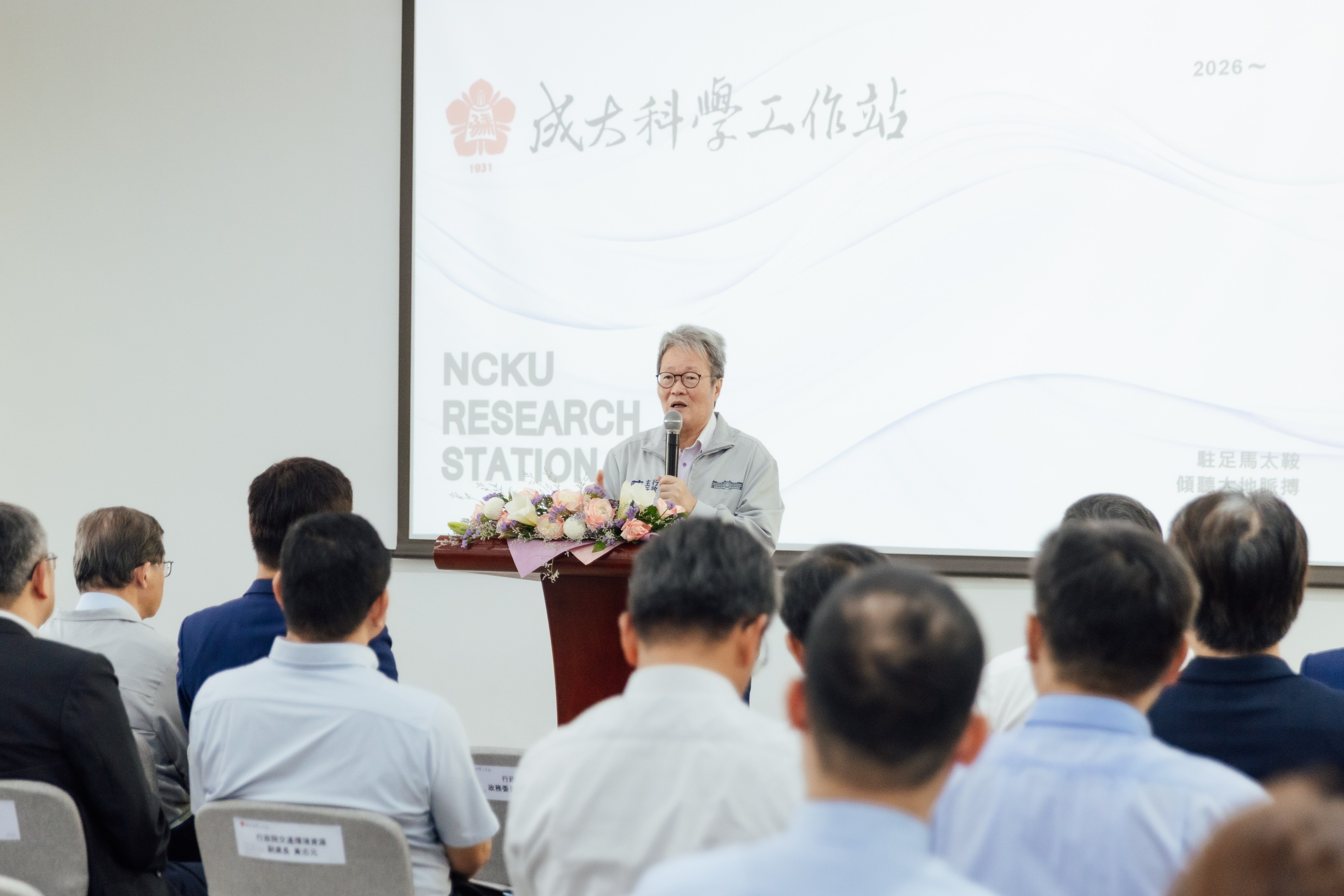
Chin-de Chen, Minister without Portfolio of the Executive Yuan and Minister of Public Construction, recalled the early days after the disaster, when tens of thousands of volunteers traveled to the affected area to help with rescue work and thanked NCKU for its determination to carry out long-term field research to apply academic knowledge in practice, helping to strengthen Taiwan’s resilience.
Chin-de Chen, Minister without Portfolio of the Executive Yuan and Minister of Public Construction, which funds the project, said in his remarks that many people had moved from northern Taiwan to Guangfu because of its natural beauty. However, the area was now faced with a complex natural disaster. He noted that the overall recovery of the Mataian River flood requires comprehensive planning and careful review of whether there were shortcomings in past management or development efforts. He also said that NCKU has strong academic expertise and has shown determination to carry out long-term field research. By applying academic knowledge in practice, the university can help strengthen Taiwan’s resilience. He expressed his gratitude to the NCKU team for their efforts.
Chen also recalled the early days after the disaster, when tens of thousands of volunteers traveled to the affected area to help with rescue work carrying shovels, crowding the trains heading to the disaster zone. He said this spirit of unity and mutual support is one of the nation’s most valuable assets. He especially thanked NCKU for contributing its professional expertise to the overall reconstruction planning for the Mataian area, which was severely damaged by flooding in September last year. He added that reconstruction of physical infrastructure has already made concrete progress. The northbound lanes of Mataian Bridge are expected to reopen by the end of this year, and the entire project is scheduled for completion next year. The Water Resources Agency is also speeding up embankment and dredging work. Regarding the landslide dam, the dam body has already been lowered and restored to a river channel condition, significantly reducing the risk.

Chien-Hsin Lai, Vice Minister of the Ministry of Economic Affairs (MOEA), is impressed by NCKU for its commitment to establishing the NCKU Research Station, contributing more than half of the school’s experts to the project and raising its own funding to support the effort. Lai hopes the research station will achieve significant results by the time NCKU celebrates its centennial anniversary.
Chien-Hsin Lai, Vice Minister of the Ministry of Economic Affairs (MOEA), expressed strong support for the efforts of the Executive Yuan and NCKU in post-disaster reconstruction at Mataian. He said that under the leadership of Minister without Portfolio Chin-de Chen, the MOEA and other government agencies are working to establish a more systematic approach to disaster prevention and management. He also is impressed by NCKU for its commitment to establishing the NCKU Research Station. More than half of the university’s colleges have contributed experts to the project, and the university has also raised its own funding to support the effort. Lai said he hopes the research station will achieve significant results by the time NCKU celebrates its centennial anniversary.
Lai also shared his observations from visiting the disaster area. He noted that local residents often face the issues of lack of reliable information and limited long-term medical resources during disasters. In his view, the establishment of the NCKU Research Station serves several important purposes. First, it can act as a communication bridge between the government and local communities. Second, NCKU’s academic credibility can help provide scientific verification and professional answers to different public opinions that may arise during the reconstruction process. He compared the station to a professional consultation center that offers trusted guidance and support.

Po-Wen Yen, CEO of the Tzu Chi Charity Foundation, highly praised NCKU’s establishment of the NCKU Research Station and expressed support for NCKU’s goal of “putting scientific research into practice.”
Po-Wen Yen, CEO of the Tzu Chi Charity Foundation, emphasized in his remarks that extreme climate events and increasingly frequent disasters can no longer be addressed by individual organizations working alone. He said that building a resilient governance system is now an urgent task. Yen highly praised NCKU’s establishment of the NCKU Research Station, calling it an important milestone in bringing academic expertise directly into disaster response efforts, helping to fill the gap faced by charitable organizations, which often lack sufficient scientific evidence when dealing with infrastructure reconstruction and environmental restoration.
Yen also expressed strong support for NCKU’s goal of “putting scientific research into practice.” He noted that charitable organizations have long worked on the front lines and understand the urgency of post-disaster reconstruction. If these experiences can be transformed into systematic databases and scientific strategies, resources can be used more effectively and recurring problems may be prevented. He added that Tzu Chi is willing to serve as a bridge by providing researchers with timely feedback from local communities and disaster survivors. Yen also pledged continued support in manpower and resources, while promoting deeper cooperation among industry, government, academia, and local communities to strengthen Taiwan’s disaster resilience and protect the land and its people.
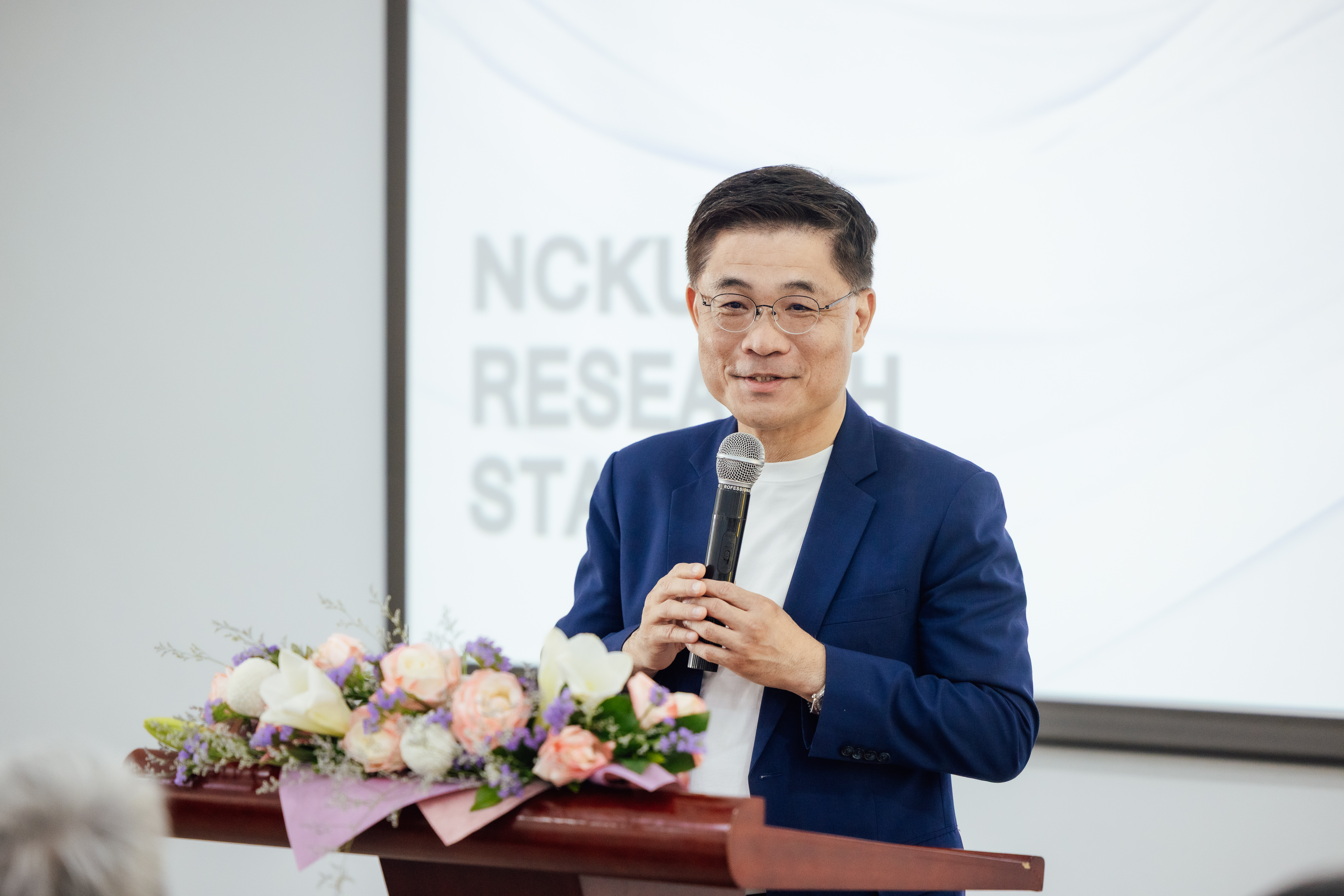
NCKU President Meng-Ru Shen, with a medical background, firmly believes that solving problems requires close engagement with the field. NCKU gathers multidisciplinary scholars to Hualien, pledging to continue deepening its local engagement and transform its academic expertise into concrete support for national reconstruction efforts.
NCKU President Meng-Ru Shen emphasized in his speech at the NCKU Research Station in Guangfu, Hualien that, as someone with a medical background, he firmly believes that solving problems requires close engagement with the field. He said the NCKU team has brought together scholars from multiple disciplines to work on-site in Hualien. This shows a clear commitment to “putting scientific research into practice.” It ensures that research is not limited to academic papers, but is translated into practical knowledge that society urgently needs.
President Shen outlined three main directions for future work. First, the team will improve algorithms and methods used in traditional engineering and soil and sediment disaster prevention. Second, to address compound disasters under climate change, the team will develop innovative approaches to build a soil database, providing a scientific foundation for future environmental restoration. Third, for post-disaster recovery challenges of disease prevention, such as disease vectors and microbial growth, NCKU will integrate medical resources to conduct systematic monitoring and help prevent infectious diseases after disasters. President Shen stressed that NCKU will continue to deepen its local engagement. By holding regular meetings and working closely with NGO partners, NCKU aims to transform its academic expertise into concrete support for national reconstruction efforts.
NCKU explained that the Mataian River incident involves a full-chain complex disaster system. It spans from the stability of the upstream landslide dam and slope, to downstream drainage and public health in local communities. Therefore, the NCKU team plans to adopt the goal of whole water basin planning and long-term management to build an integrated research framework for upstream sediment quantification, midstream flood transport, downstream flood risk in settlements, as well as AI-based modeling, public health risk assessment, and mental health studies.
NCKU is equipped with strong interdisciplinary research foundations including water resources engineering, disaster prevention, geology, civil engineering, public health, environmental monitoring, biotechnology, and social practice. The university also has the capability in integrating large-scale disaster governance issues. The project team spans multiple NCKU colleges, including Engineering, Medicine, Science, Electrical Engineering and Computer Science, Planning and Design, and Social Sciences. It also collaborates with other universities, including National Taiwan Ocean University, National Taiwan University, National Chung Hsing University, National Pingtung University of Science and Technology, and National Dong Hwa University. This cross-university national team covers fields such as hydrology, civil engineering, surveying, geospatial engineering, environmental engineering, public health, infectious disease medicine, psychology, and urban planning. It aims to develop a national-level governance solution for large landslide dam disasters in Taiwan.
The hydrology and geotechnical engineering teams will conduct field surveys, river monitoring, and simulations. They aim to understand unstable sediment sources in the dam, high-concentration sediment transport in the river, and changes in river morphology to build a risk assessment model that supports government decision-making. The research team will also introduce AI models and retrieval-augmented generation (RAG) technology to create a shared knowledge platform across government agencies that will be continuously updated and interconnected, improving decision-making and governance efficiency.
In parallel, the medical and public health teams will investigate post-disaster environmental pathogens and soil contamination risks. They will also focus on residents’ mental health and community resilience. Major disasters do not only damage infrastructure, they can also have long-term impacts on daily life, family relationships, and local industries. Therefore, public health, psychology, and social support are essential parts of recovery. These elements should be included in the governance system.
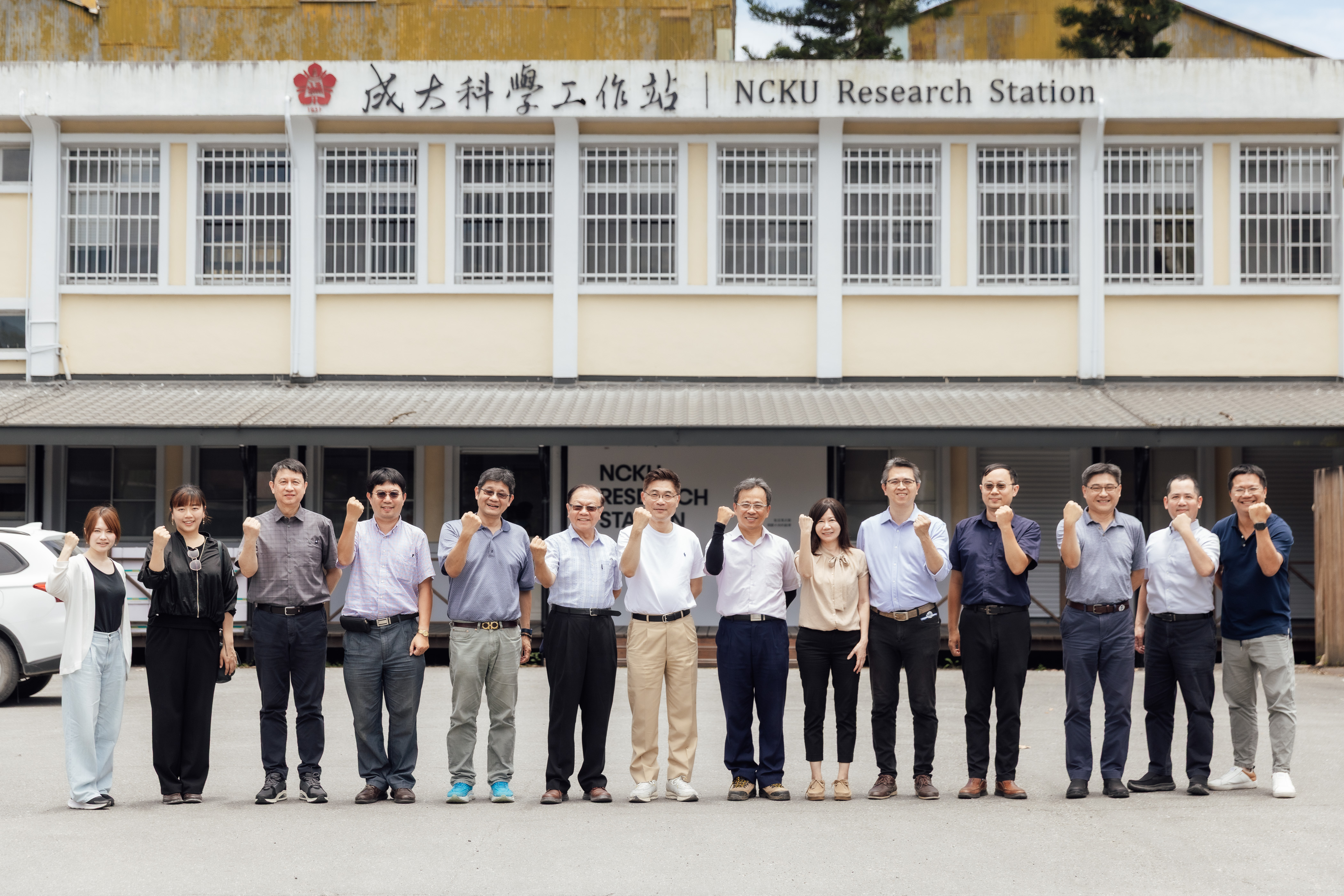
The Mataian River incident involves a full-chain complex disaster system. NCKU is equipped with strong interdisciplinary research foundations, capable of integrating large-scale disaster governance issues. The project team spans multiple NCKU colleges and collaborates with other universities to form a cross-university national team aiming to develop a national-level governance solution for large landslide dam disasters in Taiwan.
The NCKU Research Station will serve as an important hub for data collection, interdisciplinary dialogue, result integration, and education outreach. It will connect the government sector, local communities, professional teams, and university resources, linking disaster monitoring, risk analysis, policy recommendations, and knowledge translation. Students will also participate through field investigations, interdisciplinary courses, and project-based learning, which allows them to engage directly in disaster governance. This will train a new generation of talent with social responsibility and interdisciplinary skills.
The “Risk Management of Landslide Dam Breach and Watershed Resilience Governance Project” is a three-year program. NCKU will invest NT$25 million per year, for a total of NT$75 million over three years. The Public Construction Commission will also provide NT$48 million in funding. In total, the project has a scale of NT$123 million to develop a river basin management model. In addition to its application in Hualien, the project is also expected to serve as a reference for Taiwan and other countries facing large-scale compound disasters. Through this effort, NCKU further puts USR into practice with this project.
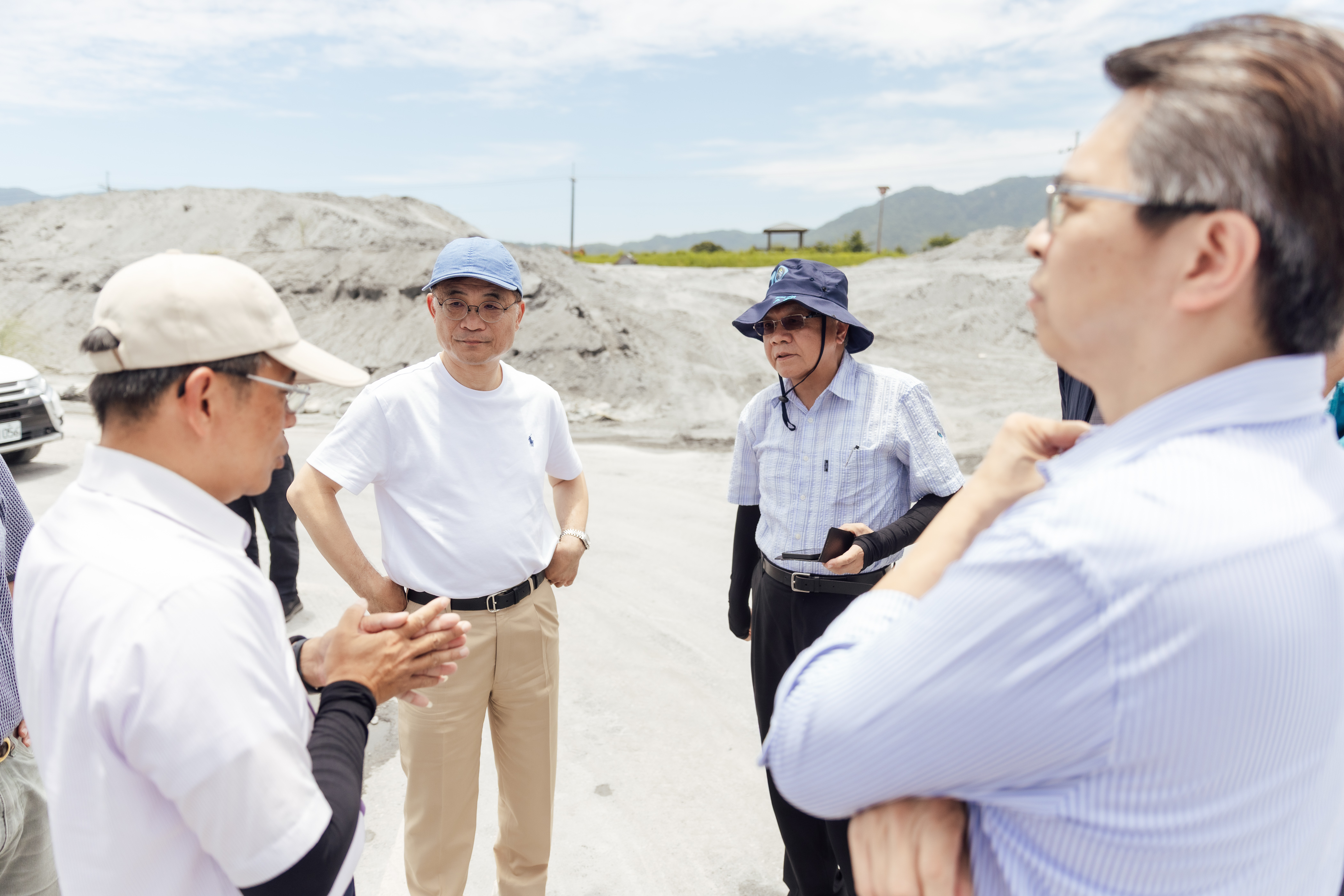
The NCKU Research Station will serve as an important hub for data collection, interdisciplinary dialogue, result integration, and education outreach, connecting the government sector, local communities, professional teams, and university resources, linking disaster monitoring, risk analysis, policy recommendations, and knowledge translation. Students will also participate through field investigations, interdisciplinary courses, and project-based learning, which allows them to engage directly in disaster governance. This will train a new generation of talent with social responsibility and interdisciplinary skills.